Five years after the last American military aircraft departed Kabul, the most honest judgment is also the least convenient one: ending the war was necessary, and the withdrawal was still a national failure.
Those truths do not cancel each other out.
The United States had spent two decades, thousands of American lives and roughly $148 billion on reconstruction trying to build an Afghan state that could survive without permanent American support. It did not survive. The Taliban entered Kabul on August 15, 2021, with a speed that exposed how much of the government and security structure existed on paper rather than in durable institutions.
But accepting that America could not remain in Afghanistan forever does not require pretending the final exit was handled competently. It was not.
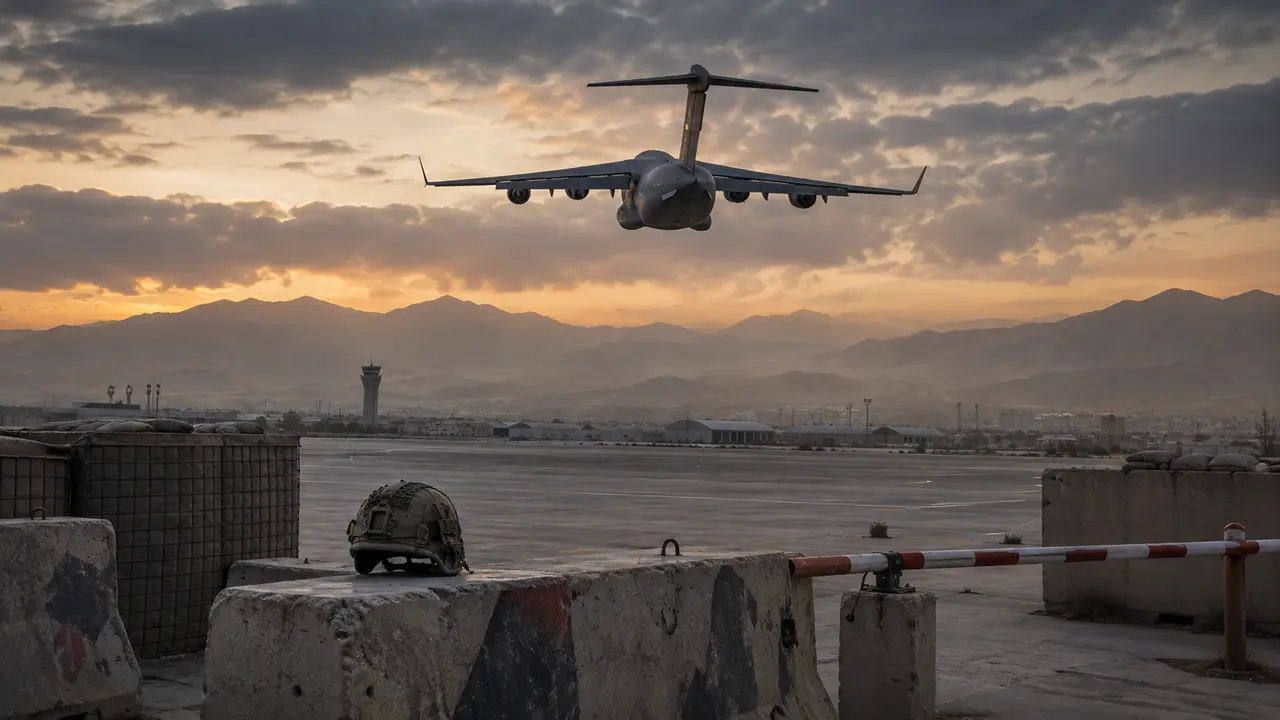
The scenes from Hamid Karzai International Airport—the crowds on the runway, desperate families pressed against gates, American personnel forced to coordinate security with the Taliban and the final deadly days at Abbey Gate—were not merely the unavoidable price of leaving. They were also the result of years of strategic self-deception followed by inadequate preparation for a collapse senior officials repeatedly said was possible, even if they misjudged how quickly it would come.
The failure did not begin in August 2021
The political temptation is to assign the entire disaster to one president. The record is more complicated, and honest political accounting should be confident enough to say so.
President Donald Trump’s first administration signed the February 2020 Doha agreement with the Taliban. It established a timetable for the removal of U.S. and allied forces, reduced American leverage and helped convince many Afghans that Washington had already chosen the Taliban as the country’s future power. The Afghan government was not a party to that agreement, while the release of thousands of Taliban prisoners strengthened the movement that would later retake the country.
By the time President Joe Biden entered office, the U.S. force had been reduced to about 2,500 troops. Biden did not inherit a stable war or a politically easy set of choices.
He did, however, inherit the responsibility to make his own decision.
The Biden administration extended the withdrawal deadline but chose a complete military departure. Senior military leaders later testified that they had recommended retaining a small force. Biden was entitled as commander in chief to reject that advice. What he was not entitled to do was treat the risks created by his decision as someone else’s problem.
The State Department’s own after-action review found that planning across both administrations was insufficient. It also described unclear senior-level direction and a reluctance to prepare publicly for a worst-case evacuation out of concern that doing so could signal a lack of confidence in the Afghan government. That concern for appearances came at a cost: when Kabul fell, the emergency evacuation had to be assembled under pressure instead of executed from a mature plan.
That is the central leadership failure. Officials feared that visible preparation might accelerate a collapse, so they delayed preparations needed if the collapse came anyway.
Heroism at the airport cannot erase failure above it
American service members and civilian personnel evacuated more than 120,000 people during the final airlift. Their performance under impossible conditions deserves lasting respect.
It should not be used as political cover for the officials who placed them in those conditions.
On August 26, 2021, an ISIS-K suicide bomber struck Abbey Gate, killing 11 Marines, one soldier and one sailor. Approximately 170 Afghan civilians were also killed, and 45 American service members were wounded. Three days later, an American drone strike intended to stop another perceived ISIS-K threat instead killed 10 civilians, including seven children. The Pentagon later acknowledged that strike as a tragic mistake.
The military’s initial investigation and a later supplemental review concluded that the Abbey Gate bombing was not preventable at the tactical level. That distinction matters. The Marines at the gate should not be blamed for failing to identify one bomber within a massive, desperate crowd when available intelligence did not provide a reliable identification.
But a finding that the attack could not have been stopped by troops on the ground is not the same as declaring the entire chain of decisions beyond criticism. Tactical innocence does not erase strategic responsibility.
Why was the evacuation ordered so late? Why did the United States give up Bagram Air Base before the evacuation crisis? Why were Americans and Afghan partners still scrambling for approvals as the Taliban closed in? Why did public assurances remain so confident when the government’s position was deteriorating?
Those are policy questions, and they belong above the level of the young Americans standing at Abbey Gate.
Accountability cannot be another political production
The Trump administration reopened the matter in 2025, when Defense Secretary Pete Hegseth directed a special review led by Afghanistan veteran Sean Parnell. The panel said in April 2026 that it had completed the substantive phase of interviews with senior military and civilian officials after reviewing millions of documents.
This week, Parnell announced that the panel had located highly relevant classified documents that had not previously been found. The documents have not been released, and their contents remain unknown. That makes the claim important—but not yet proof of a cover-up.
The administration now has a chance to deliver the accountability Gold Star families and the country were denied. It also has an obligation not to predetermine its conclusion.
A credible report should publish as much evidence as national security permits, identify which decisions were reasonable based on information available at the time, specify which warnings were ignored and distinguish bad judgment from misconduct. If officers or civilian officials failed in their duties, the report should say so plainly. If earlier accusations are not supported by evidence, it should say that too.
Accountability means more than finding names to punish. It means changing evacuation planning, preserving institutional records, protecting dissent inside the chain of command and ensuring that future presidents cannot hide behind optimistic intelligence when conditions on the ground point the other way.
The lesson is not “never leave”
Some defenders of the withdrawal argue that any criticism is secretly an argument for endless war. It is not.
America’s mistake was not simply leaving Afghanistan. It was spending years constructing a force that depended on American contractors, air support, intelligence and logistics, then acting surprised when removing those supports produced collapse. It was confusing money spent with capacity built. It was negotiating an exit without securing a durable political settlement. And it was postponing evacuation planning until urgency became chaos.
The lesson should not be that every deployment must continue forever to protect Washington from an embarrassing headline. Nor should it be that a Republican administration is exempt from scrutiny because it negotiated the original exit.
The lesson is that American power must be tied to achievable objectives, honest assessments and executable plans. When a mission no longer serves the national interest, leaders should end it—but they must end it with the same seriousness required to begin it.
President Trump was right to reject an open-ended war. President Biden was right that America could not remain indefinitely. Both administrations made decisions that weakened the final outcome. Biden owns the execution that culminated in Kabul; Trump’s first administration owns the agreement and drawdown that shaped the battlefield Biden inherited.
Five years later, loyalty to the country requires saying all of that at once.
The final measure of the current review will not be whether it embarrasses the previous administration. It will be whether it gives future presidents, commanders and diplomats a record honest enough to prevent the next Abbey Gate.
Sources
- U.S. State Department: Agreement for Bringing Peace to Afghanistan
- Modern War Institute: Archive of SIGAR’s final report and records
- State Department: After Action Review on Afghanistan
- House Foreign Affairs Committee: Afghanistan withdrawal investigation
- Department of Defense: Abbey Gate supplemental review
- Department of Defense: Kabul drone strike was a tragic mistake
- Department of Defense: Special Review Panel update, August 26, 2026
- Associated Press: Generals’ testimony on withdrawal planning