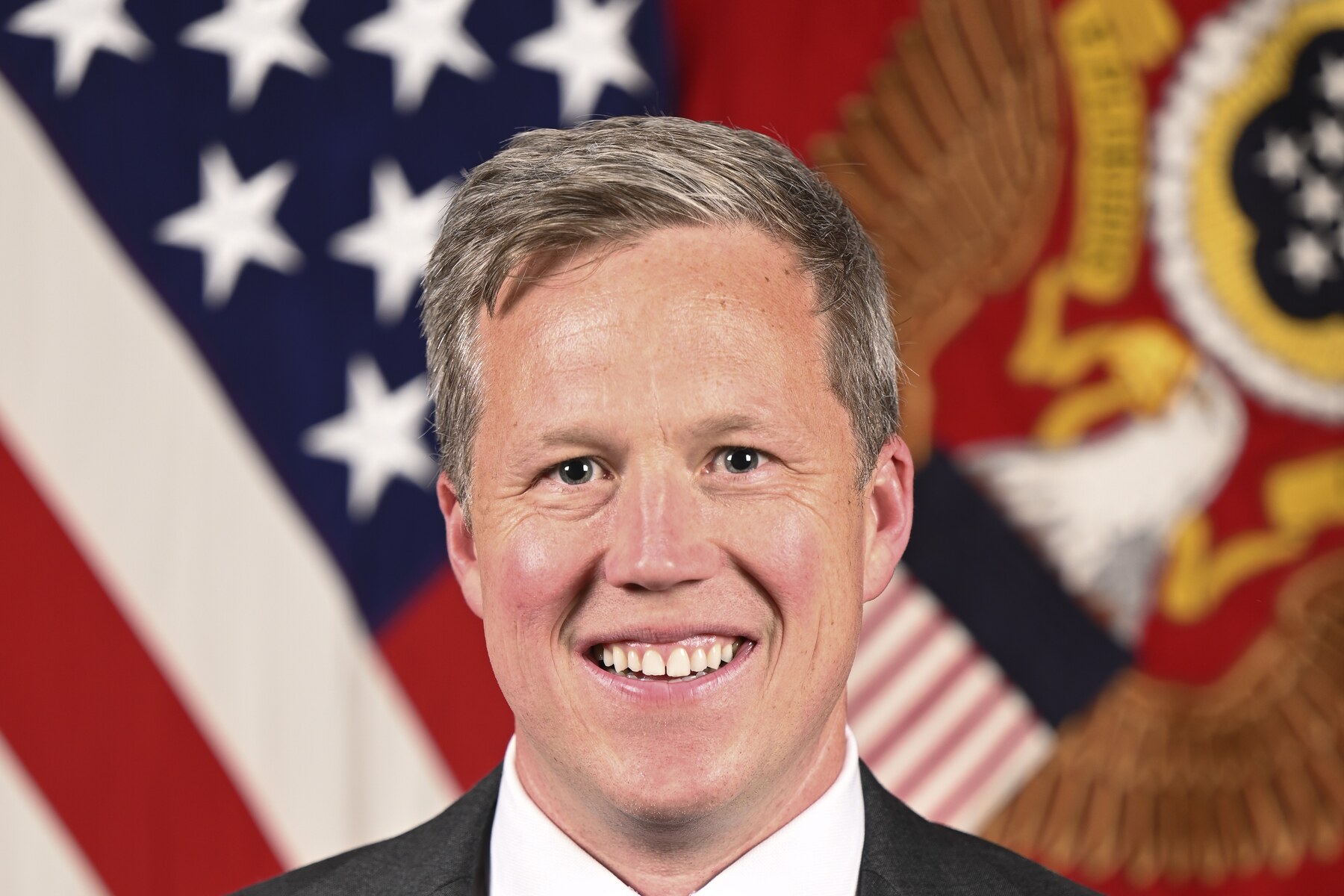
Army Secretary Dan Driscoll is stepping down after only 18 months, leaving the service without its Senate-confirmed civilian leader during an active American war and a period of extraordinary turnover at the Pentagon.
The White House confirmed Driscoll’s departure Monday night and offered extensive praise for his work. It offered no explanation for why an official it described as highly effective is leaving.
That silence is now the central question.
According to the Associated Press, an Army official said Driscoll spoke with President Donald Trump about the service’s condition and submitted his resignation. The White House said he had strengthened readiness, supported historic military operations and assisted negotiations between Russia and Ukraine.
“The United States Army is more powerful than ever thanks to his work,” White House spokeswoman Anna Kelly said.
That is the administration’s confirmed public position.
The reported explanation comes from several news organizations, including Reuters, the Wall Street Journal and the New York Post. They describe months of friction between Driscoll and Defense Secretary Pete Hegseth over Army modernization, personnel decisions and control of the service.
Those accounts rely partly on unnamed officials. PBR has not independently confirmed their descriptions of private Pentagon disputes, and neither Trump nor Hegseth has publicly said that a conflict caused the resignation.
The distinction matters. Reported tension should not be converted into proven motive merely because it fits an existing narrative about dysfunction at the Pentagon.
But the volume and consistency of the reporting—and the administration’s refusal to provide an alternative explanation—make the dispute impossible to ignore.
Driscoll was hired to disrupt the Army
Trump nominated Driscoll as a reformer who could force the Army to move faster.
A former cavalry officer who deployed to Iraq, Driscoll later attended Yale Law School and worked in finance and venture capital. The Senate confirmed him 66–28 in February 2025.
His mission was not subtle.
The Army Transformation Initiative, issued with then-Chief of Staff Gen. Randy George, ordered the service to eliminate obsolete systems, reduce overhead and redirect resources toward drones, artificial intelligence, long-range fires and other capabilities required for modern combat.
Driscoll argued that major defense contractors and the Pentagon bureaucracy had imposed excessive prices, slow production and outdated weapons on American taxpayers and soldiers.
That criticism was justified.
The war in Ukraine demonstrated how quickly inexpensive drones, distributed sensors and electronic warfare can alter a battlefield. The Iran conflict has reinforced the need for mobile air defenses, reliable logistics and weapons that can be manufactured at scale.
An Army that requires a decade to field a system already overtaken by commercial technology is not protecting taxpayers or troops.
Driscoll pushed to open military test ranges to smaller companies, accelerate counter-drone procurement and allow soldiers to evaluate equipment before the service committed to large purchases. Those reforms deserved support regardless of Pentagon personality conflicts.
Confirmed turnover, reported conflict
Hegseth removed Gen. Randy George as Army chief of staff in April without publicly explaining the decision. Gen. Christopher Donahue, who commanded Army forces in Europe and Africa, stepped down unexpectedly in June.
Driscoll publicly expressed affection and respect for George while acknowledging the civilian leadership’s authority to choose senior officers.
Reporting now says George’s removal caught Driscoll off guard and intensified friction with Hegseth. AP also reports that the Army subsequently ended a Europe-based drone initiative Driscoll had championed.
These events are confirmed. Claims that Hegseth considered Driscoll a personal threat or wanted him removed are allegations from unnamed sources, not established facts.
Civilian control of the military remains nonnegotiable. The president and defense secretary do not need approval from generals, contractors or permanent bureaucrats to change policy or replace leaders.
That authority, however, exists to advance national defense—not to settle rivalries or eliminate capable dissent.
A secretary who removes senior leaders must be prepared to explain how the replacements improve combat effectiveness. “The president has the authority” answers the legal question. It does not answer the competence question.
A wartime vacancy carries real costs
Driscoll’s departure does not mean the Army will cease functioning. Professional officers, civilians and the undersecretary will continue running the service, and Trump can nominate a successor.
The disruption is nevertheless real.
The Army is supporting operations in the Middle East, maintaining deterrence in Europe and the Pacific, defending American installations from drones, and overhauling weapons acquisition simultaneously.
Those missions require continuity between the civilian secretary, uniformed leadership and congressional committees that authorize money and personnel.
The Wall Street Journal reported that Trump had not nominated a permanent replacement for George, leaving an acting chief of staff. Driscoll’s exit now creates another senior leadership gap.
A temporary official can keep decisions moving. Acting leadership is poorly positioned to impose difficult, multiyear reforms on entrenched bureaucracies and defense contractors.
The administration therefore owes the Army more than a farewell statement.
It should identify who will lead the service during the transition, which modernization programs remain intact and whether Driscoll’s successor will continue challenging waste inside the defense-industrial base.
Congress should investigate policy, not gossip
Democrats will portray the resignation as proof that Hegseth is unfit. Some Trump allies will dismiss every question as disloyalty.
Neither response serves soldiers.
Congress should ask factual questions:
- Which Army modernization or readiness decisions produced disagreement?
- Who ordered the cancellation or reversal of Driscoll-backed drone programs?
- Did professional disagreements influence George’s removal or Driscoll’s resignation?
- Which official will exercise acquisition authority during the vacancy?
- When will Trump nominate permanent Army leadership?
- Are combat operations or deployments affected?
Oversight should not become an investigation into office gossip. It should determine whether command decisions improve readiness, speed procurement and protect the people who fight America’s wars.
Republican lawmakers have already praised Driscoll as a transformative leader. If that assessment is accurate, they should want to know why his tenure ended so abruptly.
Trump owns the outcome
Trump deserves credit for appointing reformers willing to confront a bloated procurement system. Hegseth deserves authority to demand loyalty to lawful policy and remove officials who cannot execute it.
With that authority comes responsibility.
If Driscoll chose to leave for personal reasons, the administration can say so. If a legitimate policy disagreement made his position untenable, Trump should explain which direction he selected and why. If poor management drove out a capable wartime secretary, the White House should correct it.
Conservatives should reject the idea that asking these questions undermines the commander in chief.
The Army does not belong to Driscoll, Hegseth or Trump. It belongs to the nation, and its soldiers deserve leadership chosen for lethality, judgment and integrity.
The White House says Driscoll made the Army stronger. It now must prove that his unexplained departure will not make it weaker.
Sources
- Associated Press: White House confirms Driscoll’s departure
- Reuters: Reported tensions and modernization dispute
- Wall Street Journal: Expected departure and Army leadership vacancy
- New York Post: Reported Pentagon conflict
- U.S. Army: Official Driscoll biography
- U.S. Army: Transformation Initiative
- Defense Department: Driscoll’s acquisition-reform agenda