_001.jpg)
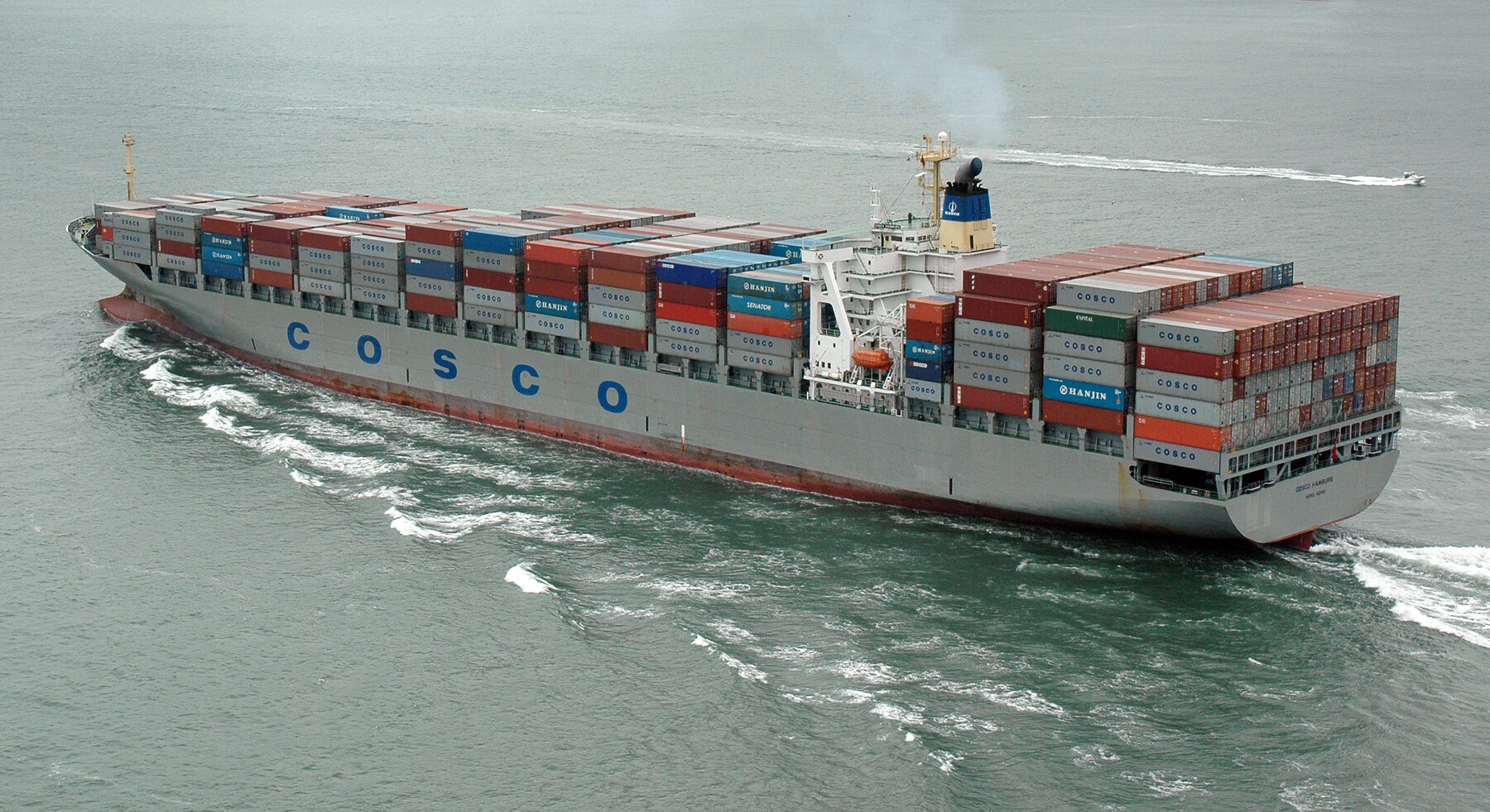
American officials are accusing China’s state-owned shipping giant COSCO of using concealed equipment aboard commercial vessels to intercept military communications near the coastlines of the United States and other countries.
If the allegation is accurate, Beijing has turned ordinary access to American ports and shipping lanes into a global intelligence-collection network.
That would require a forceful response.
It would not justify abandoning the difference between an intelligence assessment and publicly established fact.
Two senior Trump administration officials told Reuters that COSCO vessels carry sophisticated signals-intelligence equipment disguised or concealed among normal commercial systems.
According to those officials, the equipment collects information about military communications and encryption while monitoring vessels and aircraft operating near coastlines in North America, Europe and Asia.
The officials spoke anonymously and did not identify the vessels, equipment, intercepted communications or specific American locations involved.
COSCO did not respond to Reuters. China’s embassy in Washington denied the allegation and said Beijing would not direct a company to collect intelligence abroad in violation of local laws.
That leaves Americans with a grave accusation, strong reasons for suspicion—and important evidence that remains classified or undisclosed.
What the administration is alleging
Modern cargo vessels already carry extensive communications, navigation and tracking equipment. Radios, satellite terminals, radar systems and automatic identification equipment are normal parts of commercial shipping.
The administration is alleging something different.
The officials said the COSCO systems are specialized intelligence platforms designed to collect signals from military vessels and aircraft. Such collection could help China study American communications technology, identify encryption developments, monitor deployments and provide early warning of military activity.
A container ship traveling an ordinary commercial route could therefore serve two purposes simultaneously: carrying cargo for paying customers while gathering intelligence for Beijing.
That possibility is particularly concerning near naval bases, shipyards, submarine facilities, military airspace and strategic ports.
Commercial vessels operate in areas where the sudden appearance of a declared Chinese intelligence ship would attract immediate scrutiny. A cargo carrier can approach many of the same locations without appearing unusual.
The administration has not disclosed whether the alleged equipment was discovered during an inspection, identified through electronic surveillance, photographed aboard a vessel or described by a human source.
Those details may involve legitimate intelligence secrets. The government can nevertheless release more information than it has provided so far without exposing sensitive methods.
It could identify the general type of equipment, the number of suspected vessels and whether any system was physically examined by American authorities.
COSCO’s military connections are not speculation
The specific espionage allegation remains unproven in public. COSCO’s relationship with the Chinese government and military establishment is much better documented.
COSCO is owned by the Chinese state. It is not simply a private shipping company that happens to operate from China.
The Pentagon placed COSCO on its Section 1260H list of Chinese military companies in 2025. An expanded Defense Department document released in June 2026 identifies China COSCO Shipping Corporation, its North American subsidiary and several related entities.
The Pentagon says COSCO is directly owned and controlled by China’s State-owned Assets Supervision and Administration Commission, officially acts on behalf of the People’s Liberation Army and contributes to China’s military-civil fusion system.
That designation restricts certain American government dealings with the company. It is not the same as a comprehensive economic sanction, and it does not by itself establish that a particular COSCO vessel committed espionage.
It does destroy the comforting fiction that COSCO can be evaluated like an ordinary foreign carrier operating independently of its government.
China’s military-civil fusion strategy is designed to erase the boundary between civilian industry and military power. Shipping companies, technology firms, universities and infrastructure projects can advance commercial goals while supporting the Chinese Communist Party’s strategic objectives.
Beijing does not need to convert every merchant vessel into a warship to benefit from COSCO’s enormous global presence. Logistics data, port access, crew reporting and electronic collection can all possess military value.
China already uses civilian fleets for intelligence
The COSCO accusation also fits a broader pattern documented by military researchers.
A 2025 U.S. Naval War College report found that intelligence collection is a central mission of China’s maritime militia. Specialized personnel aboard ostensibly civilian vessels report information to military authorities and help fill gaps in the People’s Liberation Army’s surveillance network.
The report focused heavily on fishing and militia vessels rather than proving the existence of the COSCO equipment described by the administration.
Its broader conclusion is nevertheless relevant: Chinese military thinkers recognize the intelligence value of merchant ships operating abroad, and researchers believe Beijing is probably already exploiting that capacity.
China’s commercial fleets are numerous, globally distributed and familiar with the waters where they operate. They can collect information with less political visibility than a naval reconnaissance ship.
Research from the Naval War College has also documented Communist Party organizations and political commissars aboard parts of China’s state-owned merchant fleet.
None of this proves every Chinese sailor is a spy or every COSCO vessel is an intelligence platform.
It establishes that treating China’s state-owned commercial fleet as entirely separate from Beijing’s military apparatus would be dangerously naïve.
America cannot simply remove COSCO overnight
COSCO remains deeply integrated into international trade and regularly serves American ports. Reuters reports that it participates in several terminal-service joint ventures in the United States.
That creates both a security problem and an economic constraint.
An immediate blanket exclusion could disrupt supply chains, raise shipping costs and hurt American importers, exporters and consumers before replacement capacity exists.
Maritime-security expert Isaac Kardon warned that abruptly removing COSCO from American trade networks could amount to life-threatening surgery for the country’s supply chain.
That dependence did not happen by accident.
For decades, the United States allowed its merchant fleet and shipbuilding capacity to decline while China subsidized shipping, ports and vessel construction as strategic industries.
A Heritage Foundation analysis argues that China’s military-civil fusion system has helped companies such as COSCO dominate commercial markets while maintaining the ability to support military requirements.
The Trump administration planned to impose major port fees on Chinese shipping as part of an effort to rebuild American maritime capacity. Those fees were paused following a one-year trade understanding between Trump and Chinese leader Xi Jinping.
That agreement is scheduled to expire in November. The COSCO allegations should be addressed before Washington extends any arrangement that grants Chinese state-owned carriers continued access without stronger safeguards.
Inspect first, restrict where necessary
The United States does not need to choose between ignoring the threat and banning every COSCO ship tomorrow.
It should begin with targeted security measures.
The Coast Guard and other federal authorities should inspect vessels identified by American intelligence as carrying suspicious equipment. Inspectors should distinguish legitimate navigation and communications systems from hardware designed for covert collection.
Ships carrying unauthorized intelligence equipment should be denied entry, detained when lawful and subjected to appropriate penalties. Their operators should not receive the benefit of continued access while refusing transparent inspections.
The government should also establish enhanced security zones around sensitive naval facilities and military communications sites. Foreign state-owned vessels do not require unnecessary proximity to submarine bases, ammunition terminals or critical shipyards simply because they carry commercial cargo elsewhere in the country.
COSCO’s terminal partnerships deserve a separate review. Authorities should determine what access company personnel possess to port networks, cargo information, vessel schedules, security systems and infrastructure data.
Sensitive American port systems should be segregated from equipment or software controlled by companies tied to an adversarial government.
These actions must focus on conduct and access—not ethnicity. Chinese-American workers, lawful immigrants and ordinary crew members should never become targets of suspicion merely because of their heritage.
The issue is the documented relationship between a state-owned company and the Chinese military establishment.
Congress needs evidence and a maritime strategy
Congress should require classified briefings on the COSCO program and demand a public report containing every detail that can safely be released.
Lawmakers should ask:
- How many COSCO vessels are suspected of carrying intelligence equipment?
- Have American authorities physically inspected any of those systems?
- Which military facilities or communications were targeted?
- Did COSCO personnel knowingly operate the equipment?
- Have allied governments reached the same assessment?
- What authority would allow the United States to exclude or detain an offending vessel?
- Which American industries would face the greatest disruption if COSCO access were restricted?
The answers should determine the scope of the response.
Congress also must confront the underlying weakness that gives Washington so few attractive options. America cannot remain dependent on Chinese state-owned shipping while describing that same shipping network as a national-security threat.
Rebuilding American maritime power will require more domestic shipbuilding, a larger merchant fleet and deeper cooperation with trusted carriers from Japan, South Korea and European allies.
Protection without competitive reform will merely make shipping more expensive. Free trade without security standards will leave American ports exposed.
The country needs both security and capacity.
Access must come with conditions
China’s government benefits enormously from open American markets, secure sea lanes and access to American ports.
Those privileges cannot include the right to use commercial vessels as covert collection platforms.
The administration should release enough evidence to establish that its accusation is more than anonymous pressure before a Trump-Xi summit. If the evidence is strong, Washington should act without apology.
Inspect the ships. Remove unauthorized equipment. Restrict offending vessels. Secure military approaches and port networks. Accelerate the rebuilding of American maritime power.
But do it through documented facts and enforceable rules.
China has spent years blending commerce, intelligence and military preparation. America’s answer should not be panic or passivity.
It should be vigilance backed by evidence.
Sources
- Reuters: U.S. officials accuse COSCO of using concealed intelligence equipment
- Defense Department: June 2026 Chinese military-company list
- Defense Department: Explanation of the Section 1260H designation
- U.S. Naval War College: China’s Fishermen Spies
- Heritage Foundation: Regaining U.S. maritime power
- CSIS: China’s state-backed shipping industry