The Department of Homeland Security used an administrative customs-summons authority to obtain or seek communications records connected to journalists covering a January anti-ICE protest at a Minnesota church, according to newly reported documents and press-freedom records.
The demands raise a legal question separate from the criminal case arising from the protest: Can an agency use a statute aimed at customs-related records to seek journalists’ phone and online-account information after judges declined to authorize search warrants?
That question does not require minimizing the government’s allegations about what happened at Cities Church in St. Paul. Federal prosecutors accuse protesters—and, in the cases of independent journalist Georgia Fort and former CNN host Don Lemon, people who say they were reporting—of participating in a disruption of religious worship. Fort and Lemon have pleaded not guilty. Their guilt or innocence must be decided through the criminal process, not assumed from an indictment or a press release.
But investigative power does not become unlimited because the underlying protest was inflammatory or because immigration enforcement is politically charged.
What the records show
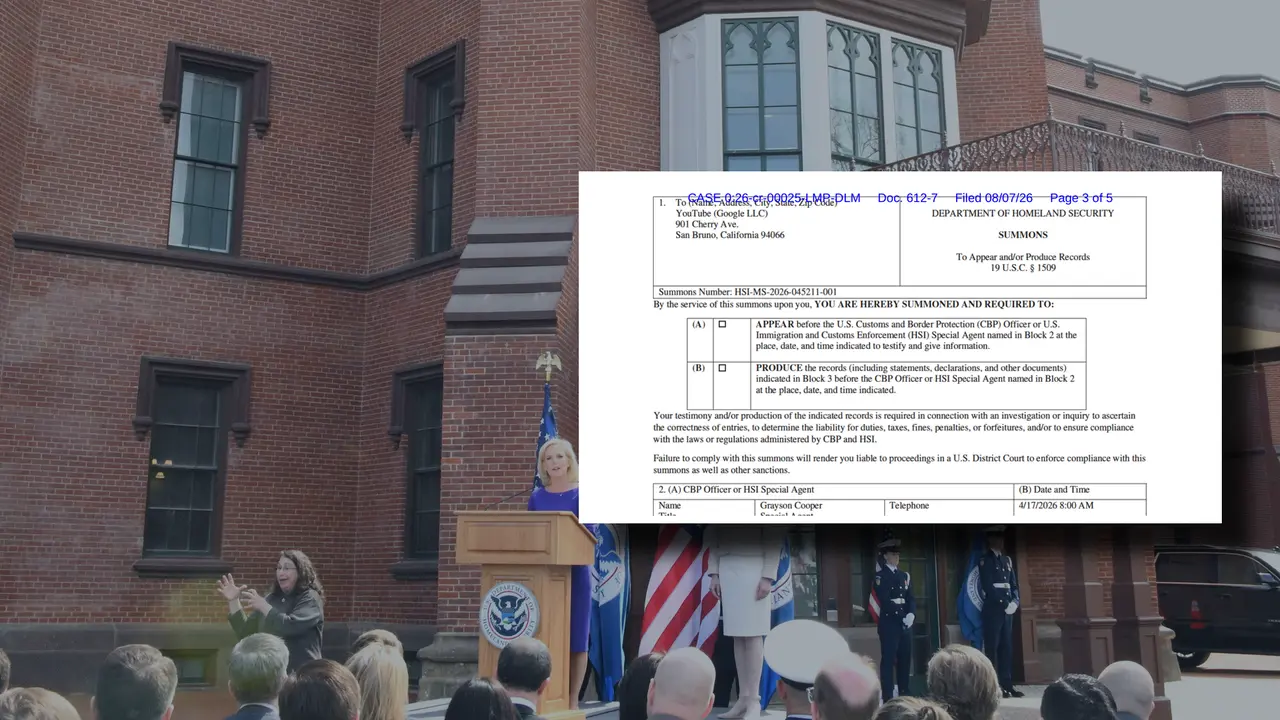
The U.S. Press Freedom Tracker reports that DHS served Google with an administrative summons dated April 3. The demand sought subscriber names, addresses, internet-protocol information and related identifying data for six YouTube accounts associated with Lemon, Fort, Megyn Kelly, Democracy Now!, the Milwaukee Journal Sentinel and independent journalist Brendan Gutenschwager.
According to the Tracker and the Guardian’s investigation, Google did not comply. The reporting says the company questioned the summons and the government did not pursue enforcement in court.
The reporting also indicates that a federal magistrate judge had previously rejected applications to search YouTube accounts connected to Lemon and Fort. The judge concluded that the government had not established probable cause and wanted the affected account holders to have notice and an opportunity to challenge the demand.
Separately, DHS obtained six months of Fort’s T-Mobile account records, according to the Tracker’s account. The records reportedly included logs reflecting more than 10,000 calls and text-message events. That figure concerns metadata—such as contact, timing or account information—not a confirmed disclosure of the content of every call or message.
The Guardian also reported that other organizations were targeted by similar demands. PBR did not independently obtain every underlying summons, so those broader claims remain attributed to the Guardian until the documents or an agency response are public.
A customs statute at the center
The summonses cited 19 U.S.C. §1509. The law authorizes customs officers to examine records and issue summonses in matters involving imported merchandise, customs duties, taxes, fees, fines, penalties and other laws administered by the Customs Service.
Administrative summonses differ from ordinary search warrants. An agency can issue the demand without first convincing a judge that probable cause exists. If a recipient refuses, the government may ask a federal court to enforce it, creating an opportunity for judicial review.
The public record reviewed for this report does not disclose DHS’s full legal theory for applying §1509 to records connected to domestic protest coverage. Google’s reported refusal also means a court did not rule on whether this particular YouTube demand was lawful.
Several facts therefore remain unconfirmed: which DHS component approved the summonses, what customs-law nexus investigators asserted, what internal First Amendment review occurred and whether senior department officials were notified.
DHS’s own watchdog previously warned about misuse
The statute caused controversy before. In 2017, Customs and Border Protection used §1509 in an attempt to identify the operator of an anonymous account critical of the first Trump administration’s immigration policy. The agency withdrew the summons after it became public.
DHS’s inspector general then examined CBP’s use of the authority. In a November 2017 management alert, the watchdog said unclear guidance had produced inconsistent and sometimes improper use. The report urged stronger controls, clearer procedures and better oversight.
That history does not automatically prove the 2026 summonses were unlawful. It does establish that DHS was warned nearly nine years ago that the same authority could be misused.
The criminal allegations remain separate
The records dispute should not erase the conduct alleged at Cities Church. Prosecutors say demonstrators disrupted a service and interfered with worshipers. The defendants contend that Fort and Lemon were engaged in newsgathering rather than joining an unlawful plan. Motions to dismiss and other proceedings are pending in the federal case.
A press credential is not a license to trespass, obstruct officers, threaten worshipers or participate in a crime. At the same time, physical presence at a contentious event does not by itself convert reporting into conspiracy. The government must prove each defendant’s conduct and intent beyond a reasonable doubt.
The same separation should govern the records controversy. Even if prosecutors ultimately prove misconduct at the church, that would not retroactively validate every investigative tool. Conversely, a defective summons would not by itself resolve the criminal charges.
What DHS and the companies should answer
DHS and the Justice Department declined to provide substantive answers to the Guardian, according to the outlet. The agencies should identify the statutory nexus they relied upon, describe the approval process and state whether the demands sought information capable of exposing confidential sources or unrelated contacts.
T-Mobile should clarify what it produced, what notice was permitted and how it evaluated the scope of the request. Google deserves credit only for what the record supports: it reportedly declined this demand. The company should disclose its legal objection and whether any narrower data was provided through another process.
Congress also has an oversight role. Lawmakers can determine how often §1509 is used for communications or subscriber records, how many demands involve journalists or advocacy groups and whether the 2017 inspector-general recommendations were fully implemented.
The broader principle is straightforward. The federal government needs lawful tools to secure the border, enforce immigration law, protect religious worship and investigate genuine crimes. It also must remain inside the authority Congress granted and respect constitutional protections for speech, press, due process and unreasonable searches.
Those obligations reinforce one another. Competent enforcement depends on powers that are both effective and lawful—and on public officials who can explain where their authority begins and ends.