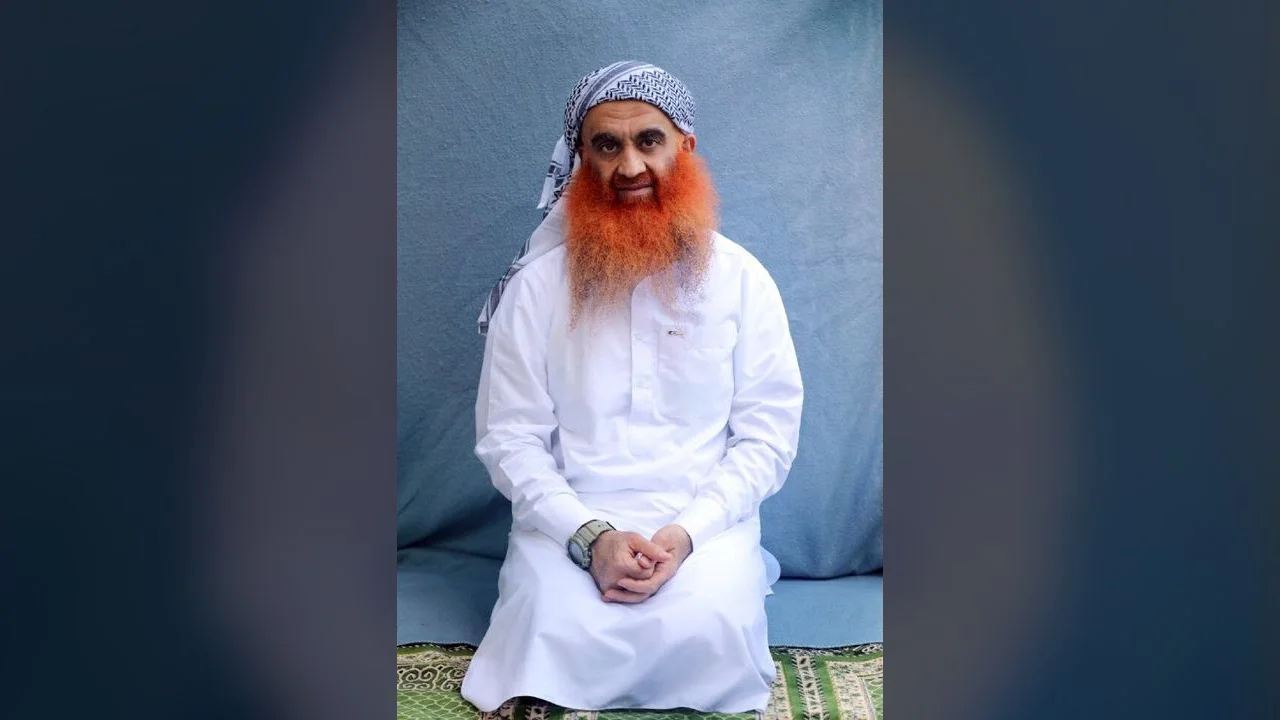

A military judge has ruled that statements alleged Sept. 11 mastermind Khalid Sheikh Mohammed gave to FBI agents in 2007 were involuntary and cannot be used against him at trial, striking one of the prosecution’s most detailed pieces of confession evidence from the long-delayed case.
Air Force Lt. Col. Michael A. Schrama concluded that prosecutors failed to prove Mohammed’s statements were voluntary after years of secret CIA detention and coercive interrogation, according to reports describing the judge’s 45-page ruling.
The decision is a major evidentiary setback, but it does not dismiss the charges, release Mohammed or cancel the trial. Mohammed and three co-defendants are currently scheduled to face a military commission at Guantánamo Bay beginning June 5, 2028.
The ruling had not been released publicly as of Friday evening because it was still undergoing a security review. The military commission’s chief prosecutor was reviewing whether to appeal.
Why the 2007 confession mattered
Mohammed was captured in Pakistan in March 2003 and spent more than three years in secret CIA custody before being transferred to the U.S. naval base at Guantánamo Bay in September 2006.
His statements during the CIA interrogation program were already considered unusable because they were obtained through treatment the government has acknowledged included waterboarding and other severe methods.
The Justice Department and FBI therefore created what became known as “clean team” interviews. Agents who were not supposed to rely on the CIA interrogations questioned Mohammed and other detainees again at Guantánamo in 2007, seeking statements prosecutors could introduce in court without the legal contamination of the earlier program.
Prosecutors argued that enough time had passed, that Mohammed understood he was speaking to different interrogators and that he chose to describe his alleged role in the Sept. 11 plot without being threatened.
The defense argued there was no genuine break. Mohammed had spent years under the control of interrogators who conditioned him to comply, his attorneys said, and he could not reasonably know in 2007 whether refusing the FBI would return him to the same treatment.
Schrama sided with the defense, reportedly finding an “unbroken continuation” between the CIA’s psychological conditioning and the later FBI questioning.
The judge found the confession was not voluntary
Under military commission rules, prosecutors must establish that a defendant’s statement was voluntary before it can be introduced as evidence.
Schrama found the government did not meet that burden. Reports on the ruling say he considered the lasting effects of the CIA program, Mohammed’s isolation and the way FBI agents advised him of his rights before questioning.
The judge reportedly found that agents did not explicitly provide the full warnings familiar from ordinary criminal cases: the right to remain silent, the right to consult an attorney and the warning that statements could be used at trial.
The ruling does not declare Mohammed innocent or decide whether his descriptions of the Sept. 11 plot were factually accurate. It decides that the government cannot use those statements as trial evidence because it did not prove they resulted from a voluntary choice.
That distinction matters. Courts exclude involuntary confessions not to excuse the accused, but because a conviction must rest on evidence obtained through a lawful and reliable process—especially when prosecutors seek the death penalty.
A serious blow, not the end of the prosecution
The 2007 interviews were valuable to prosecutors because Mohammed allegedly discussed the Sept. 11 operation in extensive detail and showed no remorse. During suppression hearings earlier this year, a prosecutor described the FBI statements as the government’s best confession evidence.
Losing those statements will force prosecutors to rely more heavily on other witnesses, records and physical or documentary evidence. The public record does not yet show exactly how the prosecution will restructure its case or whether the ruling excludes every portion of the 2007 interviews.
The government can ask the U.S. Court of Military Commission Review to reverse Schrama. An appeal, however, could create another delay in a case that has already spent more than two decades caught in disputes over classified evidence, interrogation practices, defense access and the structure of the military commission system.
The judge has not yet publicly resolved similar challenges involving 2007 FBI statements from co-defendants Walid bin Attash and Mustafa al-Hawsawi. A previous military judge excluded post-CIA statements from co-defendant Ammar al-Baluchi, also known as Ali Abdul Aziz Ali, and prosecutors appealed that decision.
Trial is set for June 2028
Just two days before the confession ruling was reported, Schrama scheduled Mohammed, bin Attash, al-Hawsawi and al-Baluchi to stand trial on June 5, 2028.
The four men are charged with conspiracy, terrorism, hijacking aircraft, murder in violation of the law of war and other offenses tied to the Sept. 11, 2001, attacks, which killed nearly 3,000 people. Prosecutors are seeking the death penalty.
The case nearly moved toward guilty pleas in 2024 under agreements that would have replaced possible death sentences with life imprisonment. Then-Defense Secretary Lloyd Austin attempted to revoke those agreements, triggering another round of litigation. A federal appeals court later blocked the plea deals from taking effect.
The 2028 date is therefore a target, not a guarantee. An appeal of the confession ruling could push the schedule again.
The cost of a prosecution built around coercion
Friday’s ruling underscores the lasting legal cost of the government’s post-Sept. 11 interrogation program.
Mohammed remains accused of helping plan the deadliest terrorist attack on American soil. The victims’ families deserve a complete accounting and a verdict that can withstand appeal. But evidence obtained after years of coercion creates vulnerabilities that no amount of public anger can erase.
The country has now spent nearly 25 years waiting for a trial and could wait several more. That delay is not a sign that the allegations are unimportant. It is evidence of how difficult it becomes to deliver durable justice when the government’s own conduct compromises the evidence needed to secure it.
The ruling should not be mischaracterized as Mohammed “beating” the Sept. 11 case. The charges remain, the prosecution continues and the government may appeal. What has been lost—for now—is one confession that prosecutors hoped would help prove the case.
For the families still waiting, the overriding question is whether the military commission can finally reach a lawful result without another decade disappearing into procedural battles.
Sources and further reading
- Washington Examiner: Judge excludes Mohammed’s 2007 FBI statements
- Lawdragon: Arguments over whether the FBI confessions were voluntary
- Reuters: Trial for accused Sept. 11 mastermind set for June 2028
- Associated Press: Military judge sets June 2028 trial date
- Military Commissions Trial Judiciary: Aug. 26, 2026 scheduling order