
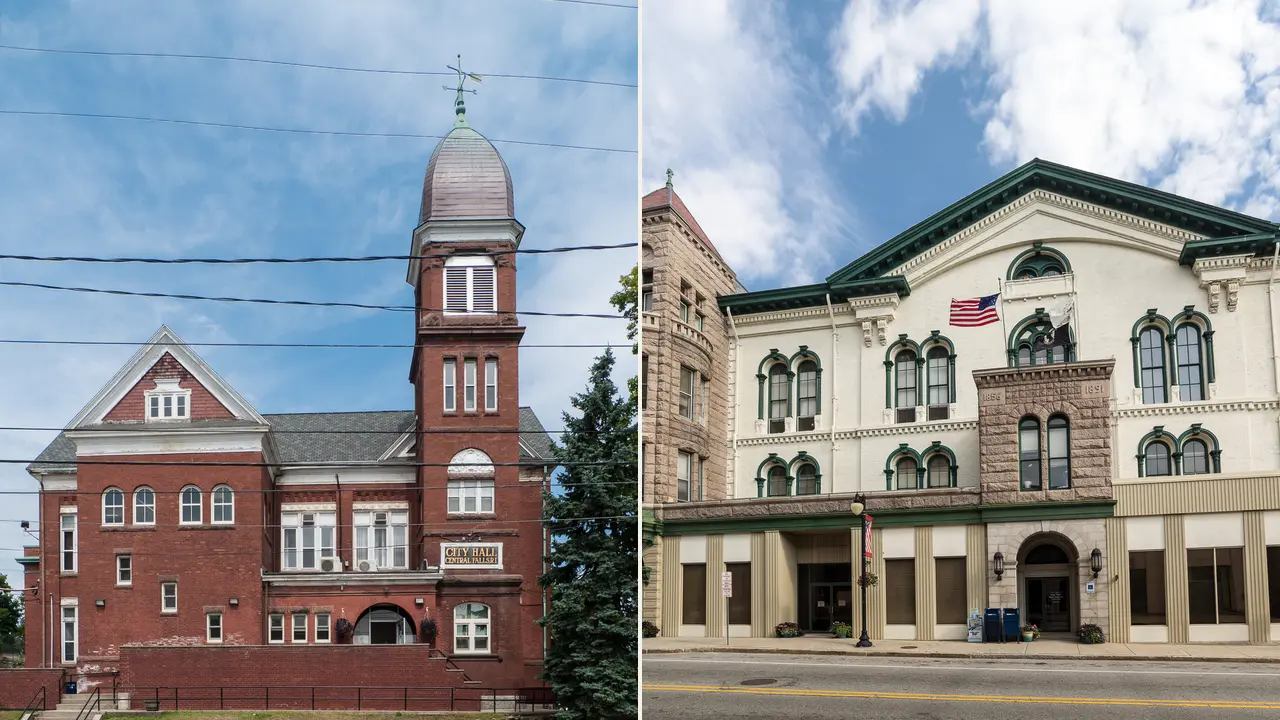


Four Rhode Island police departments failed to warn tenants that a registered Level 3 sex offender was working as their property manager and had access to their homes, according to an expanding WPRI investigation.
WPRI reported Friday that renters in Central Falls and Woonsocket were never notified about Nicholas LeBlanc’s sex-offender status. The station had previously identified similar notification failures by Providence and Pawtucket police.
The latest report turns what might once have been dismissed as a single department’s mistake into a statewide public-safety breakdown. Four departments encountered the same basic responsibility, and tenants in all four communities were apparently left without information Rhode Island’s notification system is designed to provide.
The concern is not theoretical. LeBlanc was not simply living somewhere in the same neighborhood. He worked as a property manager—a position that can involve apartment keys, door codes, maintenance access and direct contact with tenants and their children.
Two more cities are now part of the failure
WPRI says multiple tenants contacted the station after its April reporting on Providence and Pawtucket. They said LeBlanc had also managed their properties in Central Falls and Woonsocket, but police in those cities never notified them of his status.
One tenant told the station she had given LeBlanc the passcode to her apartment. After learning about his record, she began wondering whether he could have entered while her family was sleeping or while her oldest daughter was home alone.
Her anger was directed not only at LeBlanc but at the authorities she expected to warn her. In a brief comment aired by WPRI, she said it felt as though “nobody cared enough.”
That fear cannot be dismissed as hindsight. Property managers are routinely entrusted with access that ordinary neighbors do not have. A tenant deciding who receives a key or code has a legitimate interest in receiving any legally required public-safety notification before granting that access.
What Rhode Island’s notification system requires
Rhode Island classifies registered sex offenders by their assessed risk of reoffending. Level 3 is the state’s high-risk classification.
The Rhode Island Parole Board says local police distribute community notifications for covered offenders who live or work in the state. Under the state’s notification rules, when the risk of reoffense is high, law enforcement must notify members of the public who are likely to encounter the registered person through methods designed to reach them.
WPRI reported that LeBlanc is legally permitted to work as a property manager. The issue is therefore not whether police were supposed to prevent him from holding the job. It is whether the departments responsible for community notification warned the people he was likely to encounter because of that job.
The tenants identified by WPRI were not remote members of the public. They lived in properties LeBlanc managed and trusted him with access to their homes. If that relationship does not qualify as a likely encounter, it is difficult to imagine what would.
LeBlanc’s record made the warning consequential
WPRI describes LeBlanc as having sexual-assault convictions involving minors in multiple states. A separate 2015 report from NBC 10 said he had been convicted of third-degree sexual assault in Pawtucket in 2002.
NBC 10 also reported that North Carolina authorities arrested LeBlanc in 2015 after investigators said he used social media to arrange a meeting with someone he believed was a 10-year-old girl. Detectives were waiting when he arrived, according to that report. An arrest is not a conviction, and the available report did not establish the final outcome of that case.
Rhode Island’s registry system exists to balance public safety with defined legal procedures. But when the state classifies someone as high risk and requires targeted community notification, police departments cannot quietly replace that system with their own judgment that tenants do not need to know.
Central Falls says it is strengthening its procedures
Central Falls police told WPRI the department is “reviewing and strengthening” its policies and procedures.
That is a necessary response, but it does not answer the central questions: When did the department learn where LeBlanc worked? Who was assigned to determine which residents were likely to encounter him? Were any fact sheets or notices prepared? If not, where did the process stop?
Woonsocket police also responded to WPRI, but the full explanation was not included in the publicly available video transcript reviewed by Patriot Briefing Room. The department should release a complete account of what it knew, when it knew it and why tenants were not notified.
Providence and Pawtucket owe the same clarity. Four separate failures strongly suggest that Rhode Island has more than a personnel problem inside one department. It may have an inconsistent statewide process for handling offenders who work across municipal boundaries.
A statewide system cannot depend on municipal luck
Rhode Island is small, and residents routinely live, work and manage properties across city lines. A notification system that works only when information moves perfectly between local departments will keep creating gaps.
The Parole Board’s community-notification guidelines require police agencies to maintain notification plans. Those plans should be tested against cases involving employment in multiple municipalities—not only the simpler case of one offender living and working in the same city.
State officials should now conduct a documented review of all four failures and answer several basic questions:
- Which agency is responsible for notifying people at each registered work location?
- How is employment information transmitted when an offender works in multiple cities?
- Does the state confirm that each local department completed its notification plan?
- Who audits the process when an offender has keys or unsupervised access to private homes?
- Are tenants told whom to contact when required notification does not occur?
This does not require inventing a new registry or expanding government power without limit. It requires making the existing system perform the task Rhode Island already assigned to it.
Tenants should not have to learn this from television
WPRI deserves credit for following the story beyond the first disclosure. The station’s reporting prompted tenants in other cities to recognize the same pattern and come forward.
But television news cannot be Rhode Island’s notification system. Residents should not have to see a broadcast months later to learn that the person entrusted with access to their apartment was someone police were required to notify them about.
No police department can promise that every person will act lawfully. What departments can promise is that they will carry out the public-safety duties the law assigns to them.
In this case, Providence, Pawtucket, Central Falls and Woonsocket all reportedly failed that test. The next step should be a statewide accounting, a uniform procedure for cross-city employment and public confirmation that every tenant who should have been notified finally has been.
Sources and further reading
- WPRI: More tenants weren’t warned about Rhode Island sex offender
- WPRI: Providence tenants blindsided by property manager’s sex-offender status
- Rhode Island Parole Board: Sexual Offender Community Notification
- Rhode Island Parole Board: Sexual Offender Community Notification Guidelines
- NBC 10: Sex offender from Rhode Island arrested in North Carolina in 2015