
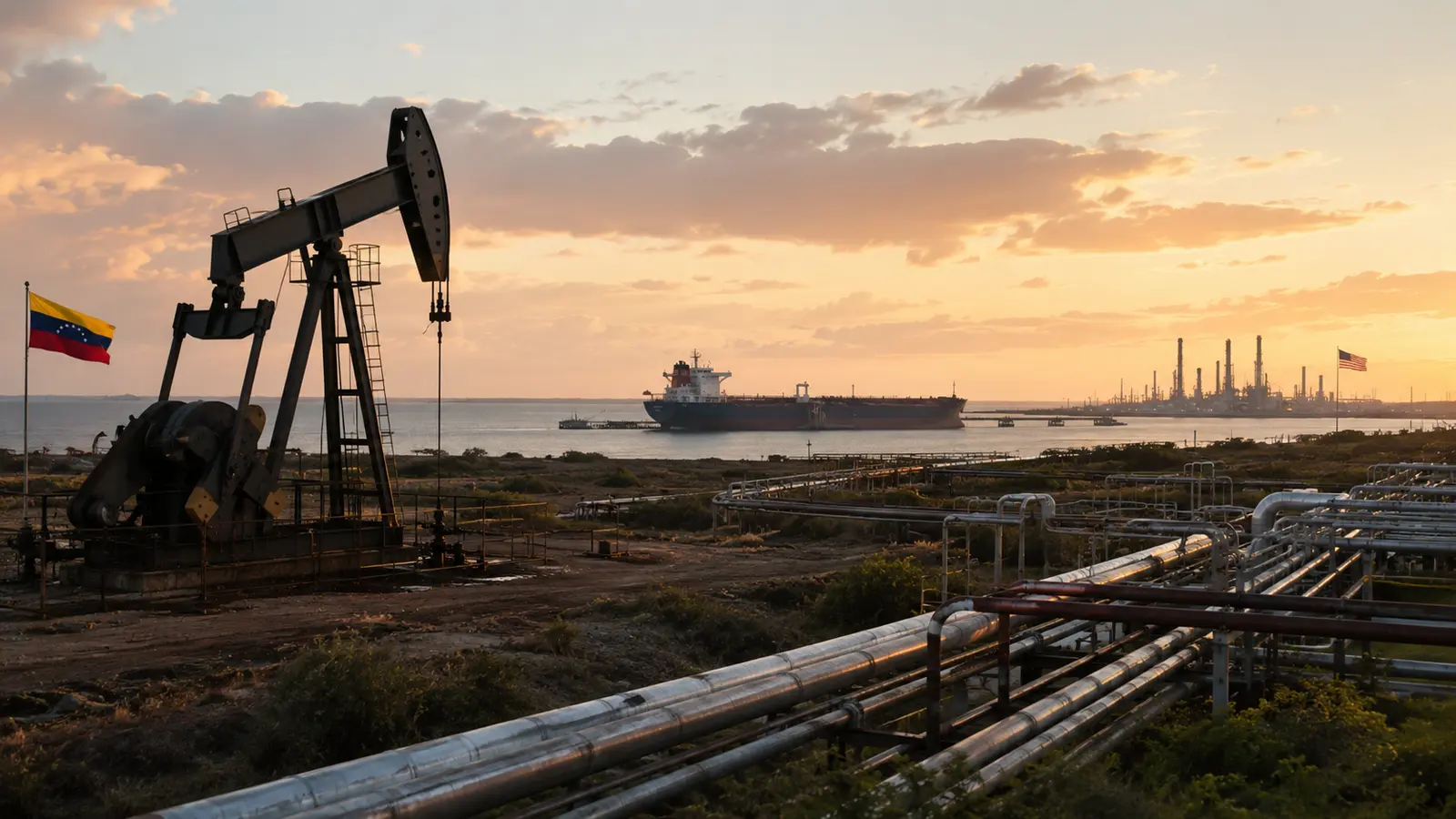
President Donald Trump announced Friday that the United States has reached an agreement with Venezuela giving American interests majority control over more than 65 billion barrels of the country’s proven oil reserves.
Trump called it the “biggest oil deal in world history” and said the arrangement was negotiated by Secretary of State Marco Rubio and Secretary of War Pete Hegseth in cooperation with Venezuelan interim President Delcy Rodríguez and private businesses.
If implemented as described, the agreement would be extraordinary in scale.
The 65 billion barrels covered by the announcement exceed the approximately 46 billion barrels of proved crude oil and lease-condensate reserves located within the United States at the end of 2024.
But that comparison requires an important qualification: control over oilfields in another country is not the same as adding 65 billion barrels to the Strategic Petroleum Reserve—or having that oil immediately available for American consumers.
The oil remains underground in Venezuela. It must be developed, extracted, processed and transported before it can affect the supply reaching American refineries.
Trump said the agreement would come at no cost to American taxpayers, more than double American oil reserves and substantially reduce gasoline prices for years. Those are significant promises, but the administration has not released enough of the agreement to independently evaluate them.
According to Reuters, the announcement did not identify the participating companies, specific oilfields, investment requirements or legal mechanism through which the United States would exercise majority control.
Prior negotiations reportedly considered placing Venezuelan fields under long-term leases before awarding development rights to American producers. A list reviewed by Reuters included 17 fields across the Orinoco Belt and Lake Maracaibo.
Venezuela has recently opened more of its energy industry to private investment, including joint ventures and production-sharing agreements. Its constitution, however, continues to reserve core petroleum activities to the state. That could produce legal challenges over how far the interim government can go in transferring control.
Those unanswered questions do not erase the potential economic and strategic benefits.
Venezuela possesses approximately 303 billion barrels of proven crude reserves—the largest reported total in the world. Much of that oil is heavy crude that sophisticated refineries along the American Gulf Coast were designed to process.
The geography is also favorable. Moving Venezuelan crude to Gulf Coast refineries is considerably easier and less vulnerable to international shipping disruptions than transporting oil from the Middle East.
About half of Venezuela’s current production was already being exported to the United States by mid-August, according to an Energy Department official cited by Reuters. American refineries were receiving more than 500,000 barrels per day.
An expanded supply could strengthen domestic refiners, reduce dependence on unstable overseas routes and redirect barrels that previously went to China. It could also help the United States rebuild its emergency petroleum stockpile.
The greatest obstacle is production.
Venezuela currently produces approximately 1.25 million barrels per day despite holding more proven oil than any other country. Its production reached roughly 3.2 million barrels per day around the beginning of the century before collapsing amid nationalization, corruption, underinvestment, failing infrastructure and international sanctions.
Reversing that decline will take more than a signed agreement.
Oilfields require drilling equipment, pipelines, electricity, storage facilities, export terminals and specialized workers. Venezuela’s extra-heavy crude also requires diluents or upgrading before it can be transported and refined.
Existing Venezuelan exports can be redirected toward American buyers relatively quickly. Developing enough new production to meaningfully alter global oil prices will likely take years and billions of dollars in private investment.
That makes Trump’s gasoline-price prediction possible, but far from guaranteed.
Oil prices respond to worldwide supply and demand—not simply the number of barrels controlled under a contract. The eventual effect will depend on how much additional oil Venezuela produces, how quickly it reaches the market, continuing military disruptions overseas and decisions by other major producers.
The “no cost to taxpayers” claim also deserves examination once the contract becomes public. A privately financed development could limit direct federal spending, but Americans still need to know whether the agreement includes government financing, loan guarantees, security commitments, sanctions concessions or other federal obligations.
Transparency is especially important because the deal combines American foreign policy with private commercial interests in another country’s most valuable natural resource.
The administration should disclose the fields involved, participating companies, bidding process, revenue structure and expected production schedule. It should also explain what Venezuelans will receive and how oil revenue will be protected from another generation of corruption.
Conservatives should recognize the strategic opportunity without treating every projection as an accomplished fact.
Rebuilding Venezuela’s oil industry through private enterprise could replace failed socialist management, strengthen American energy security and reduce Chinese influence in the Western Hemisphere. Those are legitimate national interests.
But reserves underground are not gasoline at the pump.
Trump’s announcement may represent the beginning of a historic realignment. Whether it delivers lower prices and lasting prosperity will depend on the terms, investment and execution that follow.