
A Biden-appointed federal judge handed anti-Israel activists a legal victory Friday, ruling that two immigration provisions cannot be used to revoke visas or pursue deportation because officials dislike a lawfully present noncitizen’s protected speech.
The left will portray the decision as a sweeping defeat for President Donald Trump’s immigration agenda. It is not. The administration retains broad authority to decide who enters the United States and to remove foreign nationals who violate immigration or criminal law.
It does not create a right to enter the United States. It does not protect Hamas supporters who provide material assistance to terrorists. It does not excuse threats, violence, vandalism, immigration fraud or unlawful campus occupations. The federal government retains broad authority to screen visa applicants, enforce immigration law and remove foreign nationals who violate it.
What the ruling demands is more basic: If the government wants to deport someone, it must identify a lawful ground and prove it. Political speech—even offensive, anti-American or anti-Israel speech—cannot become a substitute for evidence of misconduct.
That is not a liberal standard. It is the conservative rule-of-law standard that should apply no matter who controls the White House.
What the judge actually ruled
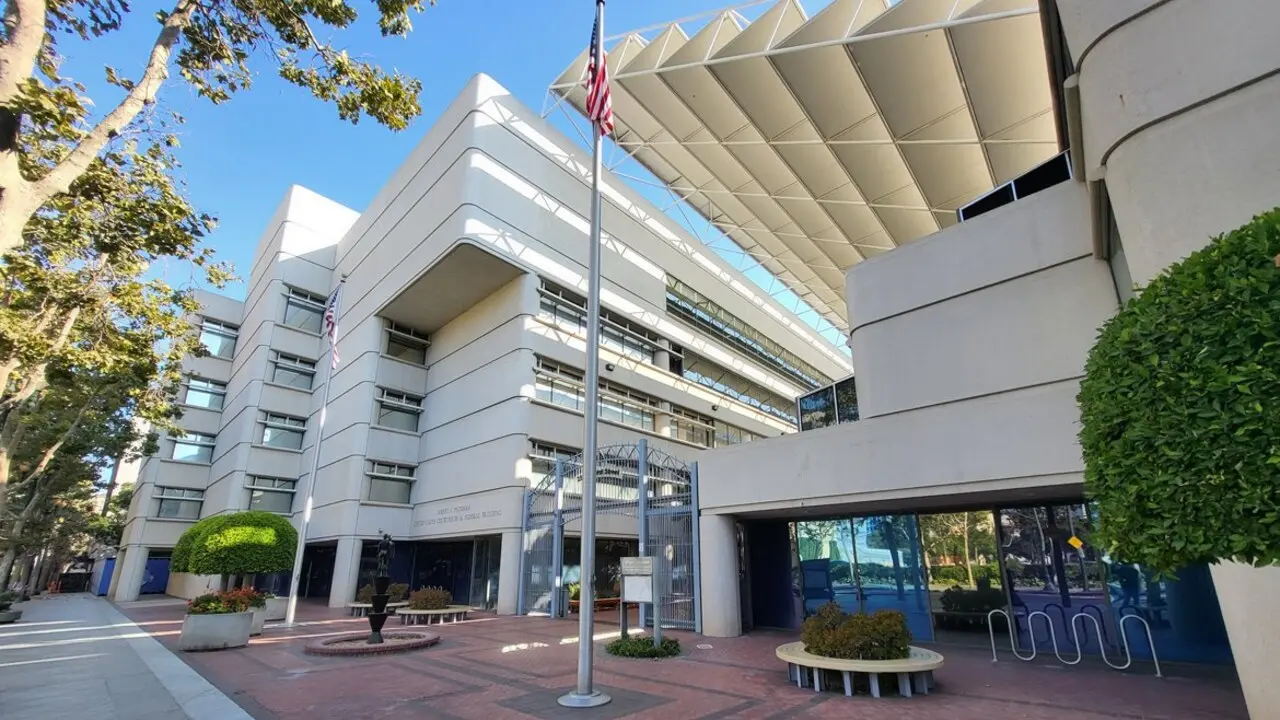
U.S. District Judge Noël Wise issued the 90-page decision in Stanford Daily Publishing Corp. v. Rubio, a case brought by The Stanford Daily and an anonymous F-1 student against Secretary of State Marco Rubio and Homeland Security Secretary Markwayne Mullin.
Wise ruled that challenged portions of the Immigration and Nationality Act violate the First Amendment when officials enforce them on the basis of constitutionally protected speech. She also found those portions unconstitutionally vague under the Fifth Amendment in that setting because they fail to give clear notice of what speech could place a lawful resident’s status at risk and leave officials with too much room for arbitrary enforcement.
The provisions allow the secretary of state to trigger deportation proceedings when a noncitizen’s presence or activities are deemed to threaten a compelling U.S. foreign-policy interest and to revoke a visa at the secretary’s discretion.
The court granted declaratory relief, meaning it formally declared the challenged applications unconstitutional. It did not issue the requested permanent injunction, and it did not erase the statutes in every circumstance. Wise denied part of the requested injunctive relief because federal law reserves that power to the Supreme Court and declined broader relief at this stage.
That distinction matters. The administration suffered a serious ruling on the merits, but headlines suggesting that every related enforcement action has been permanently blocked would overstate the result.
The administration’s objective is legitimate
Rubio has argued that a visa is a privilege rather than an entitlement and that the United States should not be required to host foreign nationals whose activities harm American interests. That argument has real force.
No country is obligated to admit everyone who wishes to enter. The executive branch has a duty to screen out terrorists, foreign agents, violent extremists and applicants who conceal disqualifying information. Jewish students also have the same right as anyone else to attend class, speak and worship without being threatened or physically blocked by political mobs.
Conservatives should not allow the left to relabel every enforcement effort as “censorship” or every anti-Israel activist as a harmless dissenter. Campus disorder has included trespass, intimidation, vandalism and conduct that universities tolerated when neutral rules should have been enforced.
But broad immigration power is not unlimited power. As National Review observed while examining the Rümeysa Öztürk case, Rubio’s position has an appealing logic but becomes legally dangerous when the alleged offense is an opinion article rather than provable misconduct. The Washington Examiner has separately presented Rubio’s defense that foreign nationals do not possess an unconditional right to remain.
The hard question is not whether Washington may remove foreign nationals. It plainly may. The question is whether lawful residents can be punished solely for expression that the Constitution otherwise protects.
The government’s own record created the problem
Wise did not decide the case solely on accusations written by the plaintiffs. The parties agreed to a stipulated record incorporating thousands of pages of evidence and findings from related litigation.
According to the opinion, Homeland Security investigators reviewed roughly 5,000 names, many drawn from the Canary Mission website, and prepared reports on fewer than 5 percent. The record examined government actions involving Columbia activist Mahmoud Khalil, Tufts student Öztürk and others, including protest activity, associations, social-media posts and opinion writing.
The most damaging point for the administration was not that the targeted speech was popular or sympathetic. Much of it was neither. It was that the reports used in the cited student cases did not rest on violence or material support for terrorist organizations, according to the court’s findings. The judge also found that officials had not supplied a clear operational definition of antisemitism for the enforcement process.
Those are findings in this civil case, not a declaration that every activist is truthful or innocent of every separate allegation. Khalil, for example, has faced distinct claims involving omissions on an immigration application. Those claims should rise or fall on their own evidence in the appropriate proceeding.
That separation is the constitutional answer. If a foreign national committed fraud, charge fraud. If an activist assaulted someone or occupied a building, prosecute the conduct. If investigators can prove material support for Hamas, use the terrorism statutes Congress enacted.
The government weakens a legitimate national-security mission when it reaches for a political label instead of a provable violation.
Free speech cannot depend on the party in power
The First Amendment is most valuable when it protects speech decent people despise. A government that may punish only popular speech is not protecting liberty at all.
The Cato Institute, joined by the Rutherford Institute and other groups, argued that the Constitution draws a major distinction between foreigners seeking entry and noncitizens already lawfully present inside the country. The government’s power is strongest at the border; once someone is admitted, constitutional restraints carry greater weight.
That principle protects conservatives too. The machinery created today to punish an anti-Israel student could be used by a future Democratic administration against a foreign-born pastor, a Canadian trucker supporting American protesters, a legal immigrant opposing abortion or an academic criticizing a war.
The Biden administration was wrong when federal officials pressured technology companies and treated disfavored COVID speech as a problem to manage. Universities are wrong when they use vague “safety” codes against conservative students. Trump’s administration is wrong if it uses equally vague immigration discretion to impose political obedience.
Consistency is not weakness. It is what separates constitutional conservatism from party loyalty.
What happens next
The immediate confirmed result is a declaratory judgment entered August 28. The case was ordered closed, but the administration may appeal to the Ninth Circuit. No appeal had been announced by the reporting cutoff, so any prediction about the appellate outcome remains speculation.
The Justice Department can challenge Wise’s reasoning. Congress can also rewrite the provisions with clearer standards tied to conduct that genuinely threatens national security. State and Homeland Security officials remain free to pursue independent immigration violations supported by evidence.
That is the stronger path.
Trump was elected in part because voters wanted secure borders, serious immigration enforcement and an end to elite tolerance for disorder. The administration should deliver those results without handing future presidents an undefined power to punish lawful viewpoints.
On the record before this court, the administration failed to keep that distinction clear. It should tighten the policy, build cases around conduct and appeal any legal conclusion it believes is wrong.
Conservatives do not have to defend anti-Israel activists to defend the Constitution. We should insist that the government punish lawbreaking—and prove it—without turning immigration enforcement into a federal speech code.
Sources
- U.S. District Court: Memorandum of decision, August 28, 2026
- Reuters: Judge rules against speech-based visa enforcement
- Associated Press: Report on the visa-speech ruling
- National Review: Analysis of the Rümeysa Öztürk case
- Washington Examiner: Rubio’s defense of visa enforcement
- Cato Institute: Constitutional brief in the case
- TIME: Background on the lawsuit
- The Stanford Daily: Editors’ account of the lawsuit
- San Francisco Chronicle: Report on the ruling