.jpg)
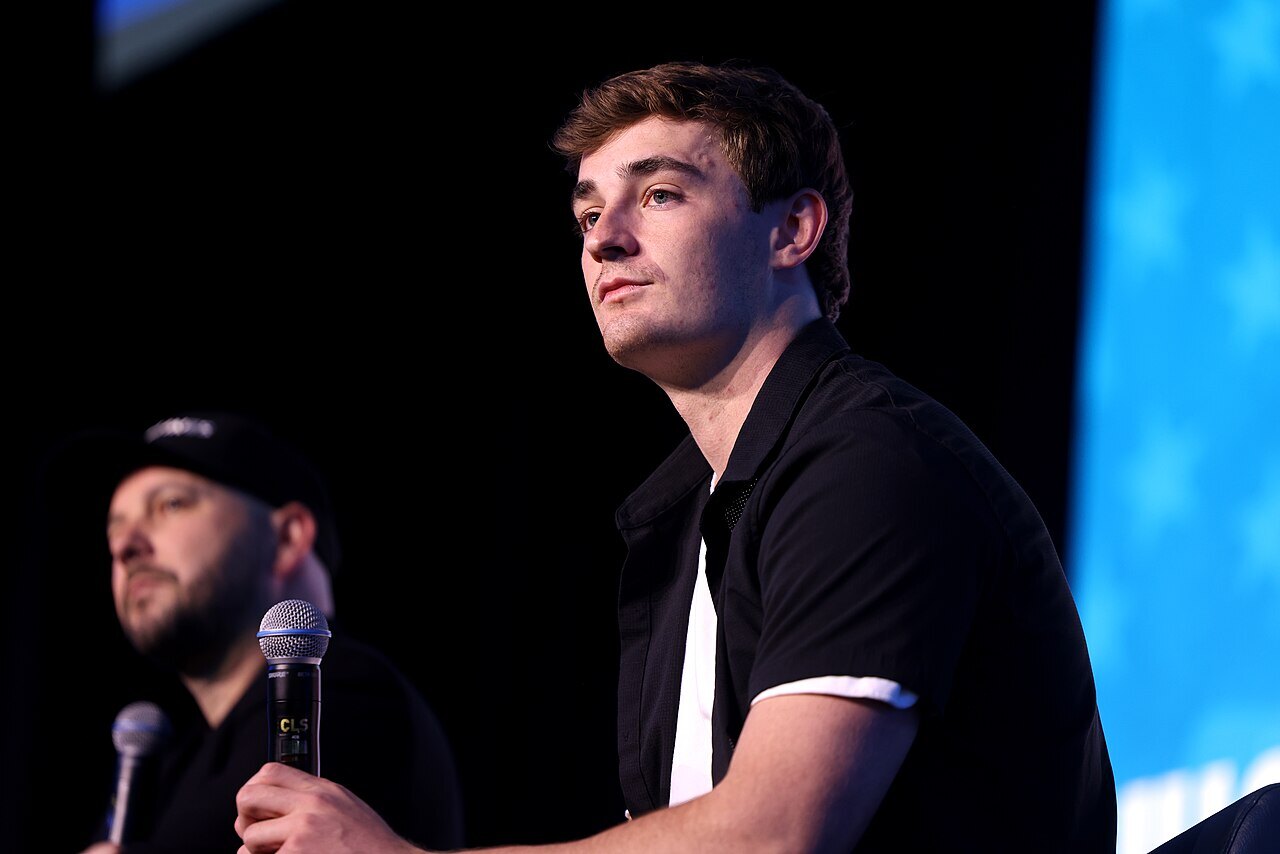
SACRAMENTO — California has responded to citizen journalist Nick Shirley’s fraud investigations in the most revealing way imaginable.
Instead of welcoming scrutiny, opening the books and demanding a full accounting of taxpayer money, Governor Gavin Newsom signed a law that exposes journalists and ordinary citizens to lawsuits, injunctions and potential criminal exposure for publishing images or personal information about people connected to “immigration support services.”
The legislation is Assembly Bill 2624, officially titled “Privacy for Immigration Support Services Providers.” Its opponents have appropriately nicknamed it the “Stop Nick Shirley Act.”
It was authored by Democratic Assemblywoman Mia Bonta.
Mia Bonta is the wife of California Attorney General Rob Bonta—the state’s chief law-enforcement officer, whose office may ultimately be called upon to enforce or defend the law she wrote. The marriage does not decide the law’s constitutionality, but the appearance of concentrated insider power is impossible to ignore: the attorney general’s wife authors a speech-restrictive law, the governor signs it and the attorney general’s office may help defend it against the journalists targeted by its practical effect. California’s own official attorney-general biography confirms that Rob Bonta is married to Mia Bonta.
That arrangement deserves scrutiny, not silence.
What the law actually says
AB 2624 does not literally declare that anyone who merely records an immigration-services worker automatically owes $4,000. Accuracy matters, particularly when attacking an unconstitutional censorship regime.
The law, which becomes operative October 1, 2027, prohibits knowingly publishing an image or “personal information” about a covered person when accompanied by the specific intent to incite someone else to cause imminent great bodily harm that is likely to occur, or to threaten the person in a way that creates an objectively reasonable fear for personal safety.
A successful civil plaintiff can receive as much as three times actual damages, with a mandatory minimum of $4,000, along with attorney fees and possible injunctive relief. A related criminal provision applies when information is posted with the specific intent that another person imminently use it to commit a violent crime or threat likely to occur.
Those intent requirements are important. They also do not eliminate the First Amendment danger.
The law defines an “image” to include a photograph, video, sketch or computer-generated image. “Personal information” includes a person’s name, physical description, work address, license-plate number, employment and employment history. The covered “immigration support services” category includes legal assistance, advocacy, case management, humanitarian relief, referrals, translation, counseling and health care. It reaches nonprofit offices, legal clinics, law offices, accredited representatives and health facilities.
Most remarkably, the definition of a covered provider, employee or volunteer includes someone who “provides, assists in providing, or receives” immigration-support services.
That is an extraordinarily broad field of people, organizations, locations, images and information to place inside a special speech-control statute. The complete language is available in the official chaptered text of AB 2624.
California already has laws against assault, stalking, harassment, criminal threats, conspiracy and incitement. Genuine threats and intentional incitement to imminent violence are not protected speech. AB 2624 instead adds a politically selected occupation to a special legal regime under which an activist organization can haul a reporter into court, demand an injunction, seek attorney fees and attempt to convince a jury that aggressive reporting was secretly intended as intimidation.
Even if the journalist ultimately wins, the process becomes the punishment.
Shirley was in California investigating alleged Somali daycare fraud
The timing and context matter.
In February 2026, Shirley traveled to San Diego and filmed at several Somali-run childcare operations while investigating allegations of “ghost” daycare facilities receiving public money despite little or no visible activity. He was joined by local activist Amy Reichert, who had reviewed state inspection records and other public information.
Shirley subsequently released a broader, approximately 40-minute California investigation alleging roughly $170 million in suspicious daycare and hospice spending. His footage included childcare locations in San Diego and hospice operations in the Los Angeles area. FOX 11 reported the allegations and Shirley’s methodology.
The $170 million figure is Shirley’s calculation—not a court judgment or formally established government loss. Nor does the Somali identity of a provider prove criminal conduct. What establishes fraud is evidence: false claims, fabricated attendance records, stolen identities, nonexistent services and money trails.
But those qualifications do not weaken Shirley’s right to investigate. They demonstrate why recording, public records, follow-up questions and government transparency are essential. A reporter does not need an indictment in hand before asking why a taxpayer-funded facility appears empty. Investigative journalism frequently uncovers evidence that later produces subpoenas, searches and charges.
California officials should answer those questions with audits. They have no business pointing a $4,000 legal gun at the camera.
The fraud record is real—but it must be stated honestly
There is no independently audited national total proving every dollar Shirley says he has exposed. In congressional testimony, Shirley has described “billions” in suspected fraud and credited his reporting with prompting extensive government action. Those are his claims, not a final accounting.
There are, however, concrete criminal cases surrounding the programs and facilities he has investigated.
Minnesota: A featured daycare owner pleaded guilty
Shirley’s viral Minnesota investigation alleged approximately $110 million in questionable childcare payments involving the facilities he examined.
The strongest direct criminal result involves Future Leaders Early Learning Center, which appeared in Shirley’s reporting. Its former CEO, Fahima Egeh Mahamud, was charged with wire fraud and conspiracy to defraud the United States.
On July 9, 2026, Mahamud pleaded guilty.
Federal prosecutors said she submitted more than $4.6 million in false claims to Minnesota’s Child Care Assistance Program and obtained another $850,000 through the Feeding Our Future nutrition program. She was released on conditional bond pending sentencing. Her plea agreement contemplated a sentencing-guideline range of 27 to 33 months, although the judge is not bound by that range and, as of the latest report, had not set a sentencing date. FOX 9 reported the plea and case figures from the federal court filings.
The larger Feeding Our Future prosecution began before Shirley’s viral investigation, so he cannot honestly be credited with uncovering the entire case. But the underlying fraud was anything but imaginary. Founder Aimee Bock was convicted of leading a $250 million child-nutrition scheme and, in May 2026, was sentenced to 500 months—more than 41 years—in federal prison.
Shirley’s reporting forced national attention back onto a fraud crisis that government officials had failed to contain.
California: Childcare fraud had already produced guilty pleas and prison
California already had its own proven childcare-benefits scandal.
Mohamed Muriidi Mohamed, president of San Diego’s UMI Learning Center, pleaded guilty to wire-fraud and theft conspiracy. Prosecutors proved that fraudulent school and employment verification forms helped generate false childcare claims covering approximately 150 households.
Mohamed was sentenced to 27 months in federal prison and ordered to pay $3.7 million in restitution. Three co-defendants also pleaded guilty. Osob Abdirazak Omar received 12 months and one day in custody and $298,910 in restitution; Omar Omar received 90 days and $101,153 in restitution. The Justice Department described the scheme and sentences.
That prosecution predated Shirley’s California trip, and UMI was a vocational and language school rather than one of his alleged ghost daycares. It nevertheless proves that false enrollment, work and attendance documentation had already been used to drain millions from the same general childcare-benefits system Shirley was examining.
California hospice fraud: Hundreds of millions charged
The scale of California’s hospice-fraud problem is even harder to dismiss.
On April 2, federal authorities arrested eight defendants in a healthcare-fraud takedown involving more than $50 million in intended losses. Prosecutors alleged that sham hospice companies billed Medicare using beneficiaries who were not terminally ill. The cases included charges of healthcare fraud, wire fraud, kickbacks and money laundering. Federal prosecutors published the defendants and allegations.
One week later, Attorney General Rob Bonta announced state charges against 21 suspects in an alleged $267 million Los Angeles hospice scheme. Five people were arrested. Prosecutors alleged that stolen identities were used to enroll non-Californians in Medi-Cal through 14 hospice companies, despite no legitimate hospice services being provided. Charges included conspiracy, healthcare fraud, money laundering and identity theft. The investigation began with a referral from the Department of Health Care Services, not from Shirley, according to Bonta’s own announcement.
In a separate case, Lynn Galbraith pleaded guilty on August 27 to healthcare fraud after admitting that her hospice company submitted approximately $2.27 million in false Medicare claims and received about $2.14 million. Her sentencing was scheduled for December 3, and she faces a statutory maximum of 10 years. The Justice Department announced her guilty plea.
These enforcement actions have not been publicly tied to the specific hospice addresses Shirley filmed, and it would be dishonest to claim otherwise. But they establish beyond serious dispute that the California fraud environment he was investigating was real, enormous and worthy of relentless public scrutiny.
New York: Another massive adult-daycare case
Shirley later alleged more than $2 billion in questionable New York adult-daycare and healthcare activity. Those totals have not been adjudicated.
Separately—and before his New York reporting—federal authorities arrested Inwoo “Tony” Kim and Daniel Lee, also known as Daniel Yang, in an alleged $120 million Medicare and Medicaid scheme involving adult daycare centers and a pharmacy. Prosecutors alleged kickbacks, bribes and billing for services that were never provided. The charges remain allegations unless proven, and no plea or sentence was located in the latest public update. The Justice Department announced the arrests and charges in February 2026.
Again, Shirley did not uncover that preexisting prosecution. It independently confirms that the fraud model he was investigating was not a fantasy invented for social media.
Who else receives special protection?
California describes these as eligibility categories under its Safe at Home program. They are not “protected classes” in the traditional constitutional sense.
The existing program covers victims of domestic violence, sexual assault, stalking, human trafficking and child abduction; victims of elder or dependent-adult abuse; reproductive and gender-affirming healthcare providers, employees, volunteers and patients; and certain public employees and contractors who fear for their safety, including public-health workers, election workers, school-board members and code-enforcement personnel. AB 2624 adds designated immigration-support providers, employees and volunteers. The Secretary of State describes the Safe at Home program and its eligibility categories.
Keeping an abuse victim’s residential address out of a government database is not the same as prohibiting publication of a journalist’s lawfully recorded video. Address-substitution programs principally control what the government discloses and generally present far fewer First Amendment problems.
The constitutional danger grows when California moves from protecting a private home address to regulating the publication of names, faces, work locations, employment information and images concerning publicly funded activity.
Existing California law already imposes similar image and information restrictions for reproductive and gender-affirming healthcare personnel and patients. One provision permits a written demand that material be removed and contains an exception tied to California’s traditional legal definition of the press. That raises its own serious question: why should an employee of an established news organization possess stronger protection than a citizen journalist with a phone?
The First Amendment protects journalism, not government-issued press credentials.
The First Amendment problems are unavoidable
AB 2624 faces several overlapping constitutional objections.
First, it is content based. Liability depends on who appears in the image and whether that person performs a government-favored category of work.
Second, it creates a viewpoint-discrimination risk. A flattering video about an immigration-services organization is unlikely to generate a threat allegation. An investigation alleging fraud, illegal conduct or misuse of public money is far more likely to be characterized as intimidation.
Third, its definitions are dangerously broad. A person’s name, appearance, work address, employment and image are precisely the material journalists routinely publish when reporting on public controversies.
Fourth, its remedies create an obvious chilling effect. The mandatory $4,000 floor, treble damages, attorney fees and availability of injunctions can force small publishers and individual reporters to self-censor rather than gamble their savings on whether a court accepts their explanation of intent.
Fifth, an injunction can become a prior restraint. An order requiring reporting to be removed—or prohibiting its future publication—strikes at the core of the First Amendment.
The Supreme Court has repeatedly protected publication of lawfully obtained truthful information concerning matters of public importance. In Bartnicki v. Vopper, the Court protected publication of material of public concern even though the original source had obtained it unlawfully and the publisher had not participated in that illegality.
California will rely heavily on AB 2624’s specific-intent and imminence language, which resembles constitutional standards governing incitement and true threats. That drafting could make a broad facial challenge harder. But it does not permit officials or politically connected nonprofits to relabel embarrassing reporting as a threat.
The most powerful challenge will come if California attempts to apply the law to ordinary newsgathering: filming publicly visible conduct, identifying people responsible for taxpayer-funded organizations and publishing evidence of suspected wrongdoing without threatening anyone or calling for violence.
That application would be blatantly unconstitutional.
Public property is not a government censorship zone
The First Amendment protects the recording of matters of public interest, including publicly visible official conduct. The Ninth Circuit has recognized that photography and recording can be protected newsgathering activity.
Public ownership, however, is not a universal press pass. Streets and traditional public sidewalks receive the strongest protection, while the interiors of police stations, post offices, libraries and other government buildings may be subject to reasonable, viewpoint-neutral rules addressing operations, security and legitimate privacy concerns.
That distinction does not help AB 2624.
California cannot prohibit a recording simply because it occurred in a publicly accessible area and embarrassed a favored organization. Nor can it transform lawful footage into punishable speech because an immigration-services employee, reproductive-health worker or other preferred occupational category appears in the frame.
Rules may regulate where a person stands or whether filming disrupts government operations. They cannot constitutionally regulate whether the resulting journalism supports Sacramento’s political narrative.
The lawsuit California deserves
Shirley and conservative allies have announced or threatened a First Amendment challenge. Members of the Republican Study Committee have also asked the U.S. Department of Justice to take legal action.
As of September 4, 2026, no filed complaint or court docket brought by Shirley could be independently confirmed. It is therefore more accurate to say that a lawsuit is being prepared or promised—not that a case has already been filed.
When that challenge arrives, the court should make one rule unmistakable:
California may punish genuine threats, stalking and intentional incitement to imminent violence. It may not use those labels as a pretext to frighten journalists away from taxpayer-funded organizations.
The state should audit every suspicious daycare, hospice, nonprofit and government contractor. It should subpoena records, recover stolen money and prosecute anyone who fabricated enrollments or billed for services never provided.
What it must never do is make political affiliation, occupation, ideology or immigration advocacy a shield against public scrutiny.
Repeal AB 2624. If Sacramento refuses, enjoin every unconstitutional application of it.
Taxpayer money belongs to the public. Public accountability requires evidence. And in a free country, the answer to an uncomfortable camera is not a government-backed threat—it is the truth.
Sources
- California Legislative Information: chaptered text of AB 2624
- California Secretary of State: Safe at Home program
- California Department of Justice: Attorney General Rob Bonta biography
- CalMatters: AB 2624, Nick Shirley and the threatened First Amendment challenge
- U.S. Senate Homeland Security Committee: Nick Shirley’s written testimony
- FOX 11 Los Angeles: Shirley’s California daycare and hospice allegations
- FOX 9: Fahima Egeh Mahamud guilty plea
- U.S. Department of Justice: Aimee Bock sentenced to 500 months
- U.S. Department of Justice: UMI Learning Center childcare-benefits case
- U.S. Department of Justice: Operation Never Say Die
- California Department of Justice: $267 million hospice-fraud case
- U.S. Department of Justice: Lynn Galbraith guilty plea
- U.S. Department of Justice: $120 million New York adult-daycare and pharmacy case
- U.S. Supreme Court: Bartnicki v. Vopper
- U.S. Court of Appeals for the Ninth Circuit: Askins v. DHS
- Wikimedia Commons: Nick Shirley photograph by Gage Skidmore