
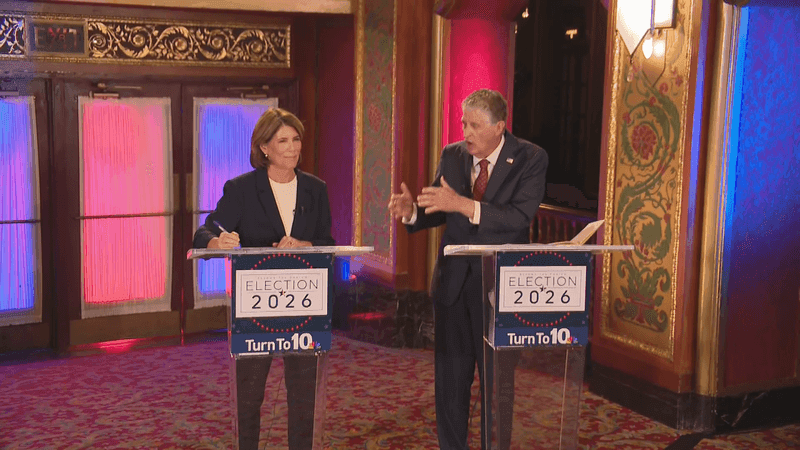
PROVIDENCE, R.I. — Rhode Island Gov. Dan McKee is entering Wednesday’s Democratic primary with the Washington Bridge crisis hanging over his administration—and voters now have an opportunity to decide whether his response deserves another term.
McKee faces former CVS Health executive Helena Foulkes in a rematch of their close 2022 primary. This time, however, the governor must defend nearly three years of disruption, changing timelines and rising costs associated with one of Rhode Island’s most important transportation corridors.
The westbound side of the Washington Bridge was abruptly closed on Dec. 11, 2023, after inspectors discovered what the Rhode Island Department of Transportation described as a critical failure involving bridge components. At the time, RIDOT said permanent repairs could take three months or longer and listed the existing project’s construction cost at $78 million.
That initial outlook did not hold.
State officials ultimately determined that the westbound bridge needed to be replaced. Rhode Island now lists the new construction cost at approximately $427.9 million, with traffic lanes scheduled to open in November 2028 and the overall project expected to conclude in 2029. The bridge carried approximately 96,000 vehicles per day when it closed, according to the state’s original announcement.
Those figures illustrate why the bridge has become more than an infrastructure problem. It is now a basic test of government competence and accountability.
The emergency decision does not answer every question
McKee has emphasized that his administration acted to protect motorists once the structural danger became clear. Closing the bridge was unquestionably necessary after the critical failure was discovered. But that defense does not settle the larger questions about prior inspections, project oversight, procurement failures, costs or why Rhode Islanders were initially given a timeline that proved dramatically inadequate.
Foulkes has made those failures central to her challenge. During an August debate, she criticized the administration’s initial timeline and unsuccessful first bidding process. She has argued that Rhode Island government has become too comfortable serving political insiders instead of demanding results for taxpayers.
McKee says the replacement is finally moving forward and points to the administration’s ability to secure federal funding. The state reports that approximately $220.9 million in competitive federal grants will help finance the project.
Federal funding, however, does not make the project free. Federal dollars are still taxpayer dollars, and Rhode Islanders have already paid through congestion, disrupted commutes and lost confidence in the state’s management of essential infrastructure.
Both candidates have records to defend
McKee has attempted to turn scrutiny toward Foulkes’ corporate record, particularly her former leadership role at CVS during the opioid crisis. Foulkes denies responsibility and says CVS substantially reduced opioid dispensing while she led its pharmacy business. CVS agreed in 2022 to pay approximately $5 billion to settle opioid-related lawsuits without admitting wrongdoing; Foulkes had already left the company.
Both candidates therefore have records that deserve scrutiny. Foulkes should answer for decisions made during her corporate career, just as McKee must answer for the performance of the government he currently leads.
But the incumbent controls the state agencies, appoints senior officials and bears responsibility for demanding accountability when major public projects fail. Voters are entitled to know which officials were responsible for missed warning signs, why the first procurement effort failed and what safeguards are now preventing further delays or cost increases.
The Rhode Island Democratic Party and state AFL-CIO have remained neutral in the primary, according to the Associated Press. Foulkes has also outraised McKee and invested heavily in advertising, demonstrating that the rematch is a serious challenge rather than a symbolic campaign.
A direct accountability vote
Rhode Island’s Democratic lean means Wednesday’s winner will be strongly positioned for the general election. That makes the primary an especially important accountability mechanism.
McKee’s administration can point to construction now underway and a defined completion schedule. Voters must decide whether that progress demonstrates recovery—or arrived only after years of disruption, failed expectations and avoidable uncertainty.
The Washington Bridge is being rebuilt. The governor’s credibility may be harder to repair.