
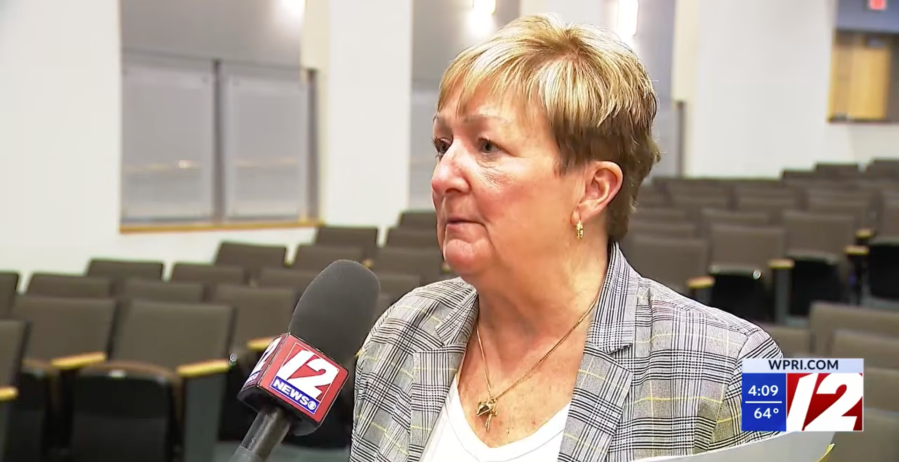
Update, September 3: Democratic state Rep. Julie Casimiro resigned effective August 31 after this article was first prepared. The original issue remains important because Rhode Island law did not provide a quick, clear procedure for resolving whether a sitting legislator who moved out of state could continue serving.
Casimiro represented House District 31, covering North Kingstown and Exeter, for nearly a decade. She made Hardeeville, South Carolina, her primary residence effective July 1 but initially said she would finish her term from roughly 1,000 miles away.
She had already announced that she would not seek reelection. The regular legislative session ended in June, but the House could have returned for additional votes before her successor took office in January. Casimiro continued receiving a legislative salary of about $794 every two weeks along with health coverage, according to WPRI and the Providence Journal.
Her defense was straightforward: she said she was still doing constituent work remotely, and a resignation would leave District 31 without a state representative because Rhode Island's deadline for a special election had passed.
Those facts explain her argument. They did not settle the constitutional problem.
Representation is tied to the represented community
Article III, Section 1 of the Rhode Island Constitution says that no person may hold civil office unless that person is a qualified elector for the office. State law defines voting residence as a person's fixed and established domicile, based on regular physical presence and an intention to remain indefinitely.
Casimiro publicly acknowledged that South Carolina had become her primary residence. Attorney General Peter Neronha therefore asked her to explain how she remained eligible to hold a Rhode Island House seat and advised her to resign.
House Speaker Christopher Blazejewski also said she should consider stepping down. State Rep. Jason Knight called for resignation outright. Helena Foulkes, who had Casimiro's endorsement in the Democratic gubernatorial primary, agreed through a spokesperson that Casimiro should resign.
This was not a partisan attack manufactured by Republicans. The most visible pressure came from fellow Democrats and the state's Democratic attorney general. That is worth noting because accountability is more credible when officials apply residency rules to members of their own party.
Remote work does not erase representative government
Casimiro argued that she could answer calls and handle constituent matters from South Carolina. On a practical level, some legislative work can be performed by phone or email. The pandemic permanently changed expectations about remote work, and Rhode Island lawmakers are not in daily session year-round.
But a legislative seat is not an ordinary remote job. The office belongs to a geographic district. Residence connects a representative to the taxes, services, schools, roads, utility costs and government decisions experienced by the people who elected her.
A member who permanently establishes a home in another state no longer shares that day-to-day civic relationship. Good intentions and prior service do not remove the problem.
Casimiro had a long record of advocating for children and families, and colleagues praised that work when she resigned. The issue was not whether every part of her record should be discarded. It was whether past service could override a current qualification for office. It could not.
The vacancy argument exposed another weakness
Casimiro raised a legitimate concern when she asked who would help District 31 constituents if she resigned. Because the special-election deadline had passed, her departure meant the seat would remain vacant until January.
That is an argument for fixing the vacancy law, not for stretching the residency requirement.
Rhode Island should establish a clear late-term succession process for district offices. Options could include a narrowly limited temporary appointment, a special-election window suited to modern election administration or a nonvoting constituent-services office that operates until voters choose a successor.
Any temporary mechanism would need safeguards against party insiders using vacancies to install favored candidates. A replacement should not gain an unfair incumbency advantage without voter approval. But the current all-or-nothing system creates pressure to tolerate a legally questionable arrangement because residents otherwise lose service.
Pressure produced the correct result
On August 28, Neronha sent Casimiro a letter saying Rhode Island law requires a public officeholder to be domiciled in the state and asking for a response. Three days later, Casimiro said she had consulted two attorneys who believed she remained eligible but would resign because the controversy was overshadowing her work.
She characterized the dispute as political theater. Yet the underlying question was concrete: can someone whose primary residence is in South Carolina remain a qualified elector for a Rhode Island district?
Her resignation ended the immediate dispute before a court or the House had to resolve it. It did not answer how the state would handle the next case.
Rhode Island needs an automatic process
Residency controversies should not depend on newspaper reports, social-media outrage or discretionary pressure from legislative leaders.
The General Assembly should enact a transparent process requiring an officeholder to report a change of domicile promptly. A neutral official or tribunal should determine eligibility on a defined timetable, with notice, evidence and an opportunity to respond. The law should identify who may initiate review and what happens while the case is pending.
The process must apply equally to Democrats, Republicans and independents. It should cover lawmakers who move out of state, officeholders who establish only a paper address in their district and anyone else whose eligibility materially changes after election day.
PBR's conclusion
Julie Casimiro's resignation was the correct outcome. A Rhode Island representative should live in Rhode Island, and a district-based legislator should maintain the domicile required to be a qualified elector for that district.
Her concern about constituent service was real. The constitutional concern was more fundamental. Rhode Island can solve both only by pairing enforceable residency rules with a workable plan for late-term vacancies.
Democratic officials deserve credit for pressing a member of their own party. Now they should turn a one-off controversy into a durable rule that does not depend on who holds the seat.
Sources
- WPRI via AOL: Casimiro moved out of state and initially refused to resign
- WPRI via AOL: Casimiro resigned after legal and political pressure
- Rhode Island Current: Casimiro resigns after move to South Carolina
- Rhode Island Attorney General letter to Rep. Casimiro
- Rhode Island General Laws § 17-1-3.1: residence for voting purposes