
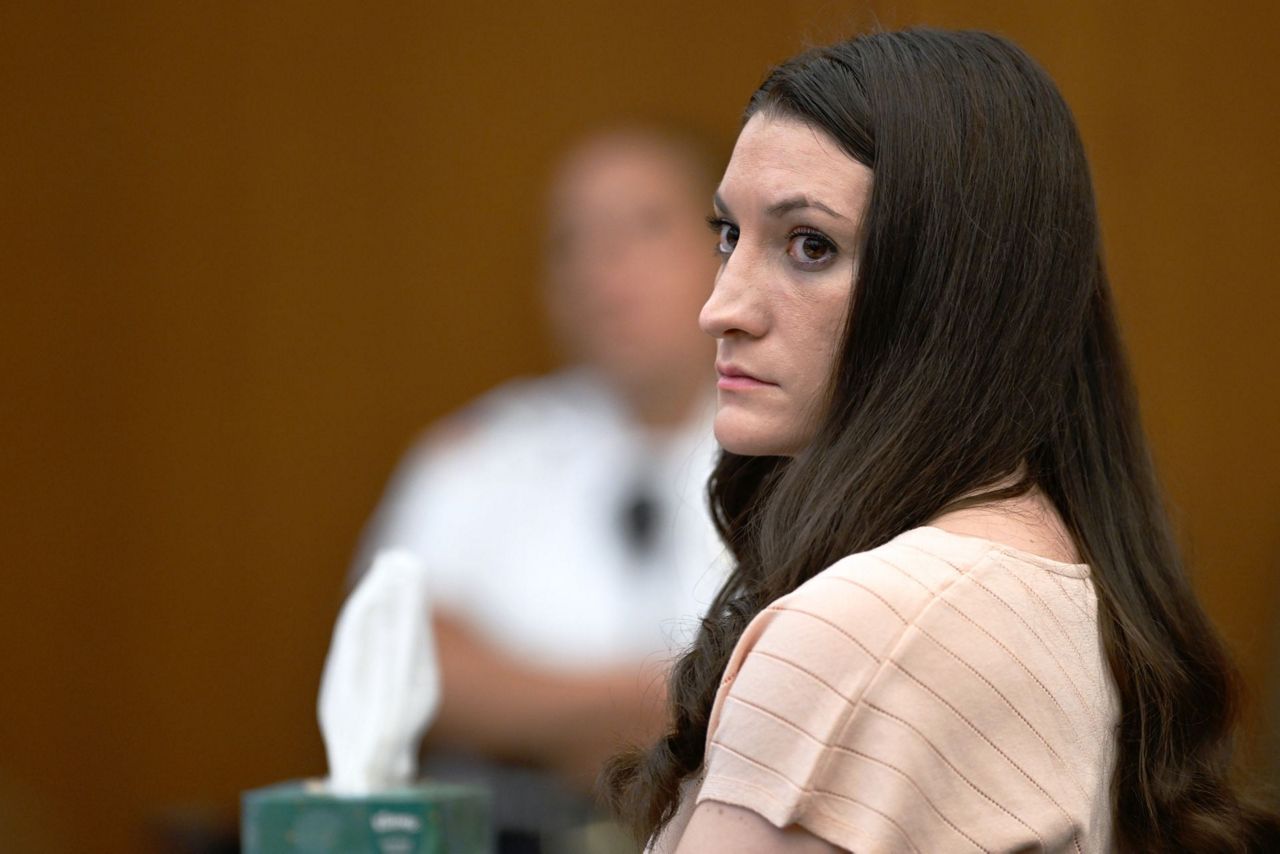
PLYMOUTH, Mass. — A Massachusetts judge declared a mistrial Friday in the murder trial of Lindsay Clancy after jurors said they could not reach a unanimous verdict over whether she was criminally responsible for killing her three children.
The mistrial came on the jury’s seventh day of deliberations, following approximately 40 hours of discussion and more than four weeks of trial proceedings. Judge William Sullivan dismissed the jury after receiving its latest message reporting that further deliberations would not resolve the impasse.
Clancy, 36, never disputed that she killed her children—5-year-old Cora, 3-year-old Dawson and 8-month-old Callan—inside the family’s Duxbury home on January 24, 2023. She subsequently attempted suicide by jumping from a second-story window, leaving her paralyzed from the waist down.
The central issue at trial was whether Clancy was legally responsible for her actions.
Her defense argued that she was experiencing postpartum psychosis and lacked the capacity to appreciate the wrongfulness of her conduct or control her actions. Prosecutors acknowledged that Clancy had serious mental-health problems but argued that the killings were planned and that she understood what she was doing.
A dispute inside the jury room
The jury reported being deadlocked multiple times before the mistrial.
A message from the foreperson alleged that one juror was not properly applying the court’s instructions concerning reasonable doubt. Defense attorney Kevin Reddington asked the judge to remove that juror or conduct a deeper inquiry, while prosecutors maintained that the disagreement concerned how jurors interpreted the evidence—not misconduct or outside influence.
Sullivan questioned the jurors individually, repeated the applicable legal instructions and declined to remove anyone from the panel. The defense then sought emergency intervention from the Massachusetts Supreme Judicial Court, but Justice Dalila Argaez Wendlandt denied the request.
Reddington subsequently characterized the division as an 11-to-1 split favoring a finding that Clancy was not criminally responsible. However, the court did not formally poll the jury or accept a partial verdict. That claimed vote therefore represents the defense’s account, not an official judicial finding.
What the mistrial means
A mistrial is neither an acquittal nor a conviction.
Clancy remains charged with three counts of first-degree murder. Because the jury did not return a verdict, the constitutional protection against double jeopardy generally does not prevent prosecutors from trying the case again before a new jury.
Plymouth County District Attorney Timothy Cruz said Friday that his office had not made an immediate decision about a second trial. A status conference is scheduled for September 29, when the prosecution and defense are expected to discuss how the case will proceed.
Several paths remain available:
- A new trial: Prosecutors can retry the murder charges before an entirely new jury. Jury selection, testimony and the presentation of evidence would begin again.
- A negotiated plea: The two sides could reach an agreement that avoids another lengthy and emotionally difficult trial. No such agreement has been announced.
- Dismissal of some or all charges: Prosecutors possess that authority, although dismissal appears less likely given the severity of the case and the district attorney’s public statements.
- A defense motion for a finding of not guilty: Clancy’s attorneys can argue that the prosecution’s evidence was legally insufficient under Massachusetts Rule of Criminal Procedure 25. That is different from asking a judge to decide which psychiatric expert was more persuasive, and such motions face a demanding legal standard.
What is most likely?
A retrial currently appears to be the most likely outcome, but it is not yet official.
That assessment is based on the three pending first-degree murder charges, the absence of any recorded partial verdict and Cruz’s statements about continuing to seek justice for the children. The prosecution may nevertheless use the coming weeks to evaluate the jury’s deadlock, the extensive psychiatric evidence and the likelihood that another jury could also struggle to reach unanimity.
If prosecutors proceed, both sides will have an opportunity to revise their presentations. Jury selection will likely receive particular attention, especially regarding potential jurors’ understanding of postpartum psychosis, criminal responsibility and the distinction between mental illness and legal incapacity.
The psychiatric testimony is also likely to remain decisive. Defense expert Dr. Phillip Resnick concluded that Clancy was psychotic and unable to control her actions. Prosecution expert Kirk Heilbrun concluded that she was not experiencing acute psychosis and understood the nature and consequences of what she did.
A new jury would be required to evaluate that evidence independently. It would not be told to adopt the conclusions—or the reported numerical division—of the first jury.
Clancy is not automatically released
Clancy has been held at Tewksbury Hospital while the criminal case remains pending. The declaration of a mistrial does not automatically change that status.
Likewise, a future verdict finding her not guilty because of a lack of criminal responsibility would not necessarily mean immediate release. Massachusetts prosecutors could seek her civil commitment to a psychiatric facility, with continued confinement determined through mental-health evaluations and judicial review.
For now, the case remains unresolved. The next confirmed public milestone is the September 29 status conference, when prosecutors are expected to provide a clearer indication of whether they will seek a second trial.