The United States struck a broad collection of Iranian military targets Tuesday night, and Tehran answered by launching missiles and drones toward American positions and regional allies across the Middle East.
The exchange was the most serious escalation since July and ended any remaining pretense that the six-month conflict had entered a durable lull.
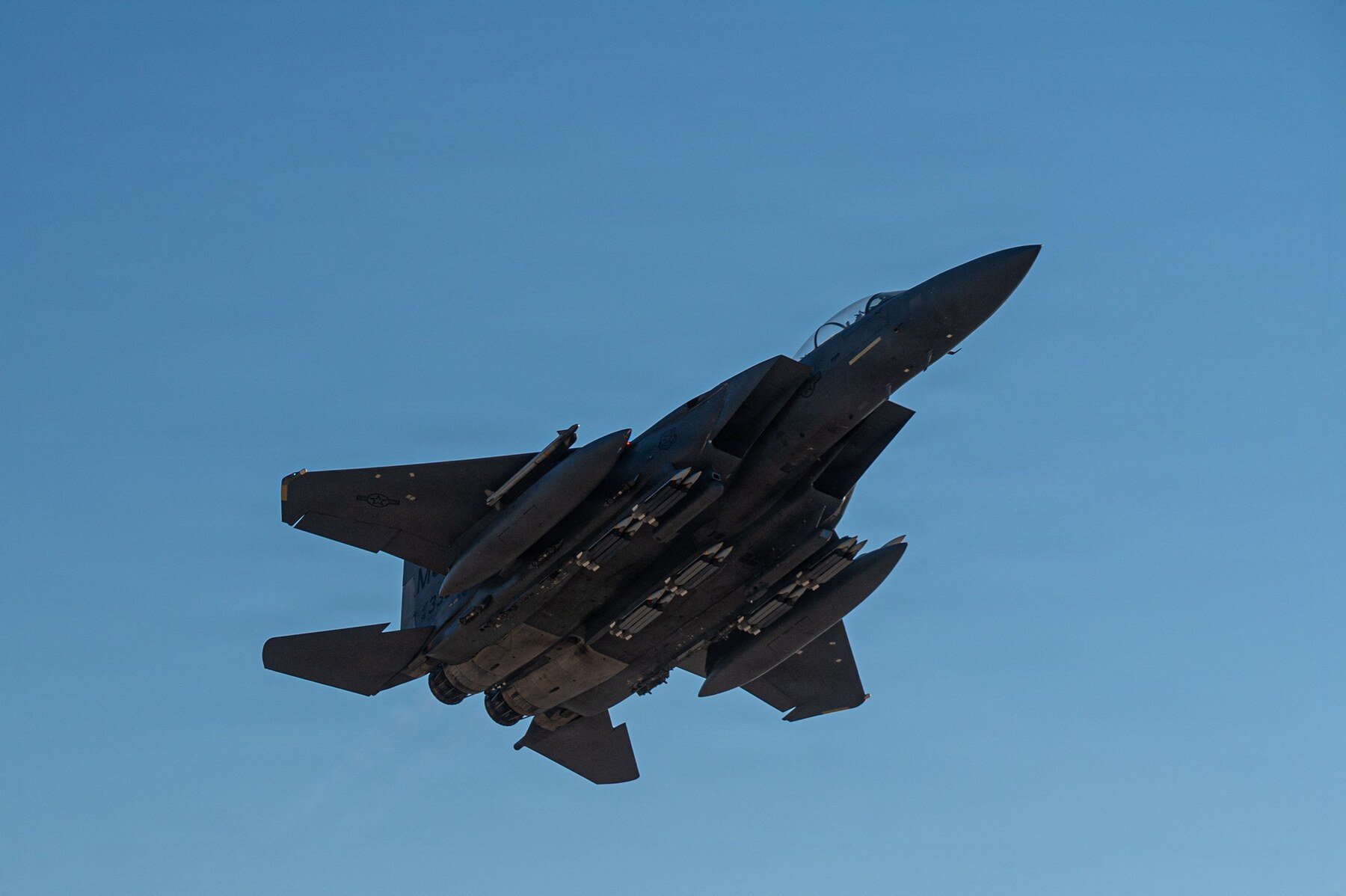
According to an official U.S. Central Command release, American forces attacked Islamic Revolutionary Guard Corps air-defense sites, radar installations, communications facilities, maritime assets and mine-laying capabilities.
CENTCOM said the targets were connected to recent attempts against commercial shipping in the Strait of Hormuz and American service members. More than 50,000 U.S. troops remain in the region.
If the military’s account is accurate, the core justification for the operation is strong.
Iran does not possess a lawful right to mine an international waterway, attack civilian tankers or fire on American personnel without consequence. Destroying equipment being used for those purposes is a defensive application of American power.
But a justified strike does not answer the larger question that Washington has avoided for six months: What outcome is the United States now fighting to achieve?
Iran widens its retaliation
Iran’s response reached well beyond its own coastline.
Bahrain, which hosts the U.S. Navy’s Fifth Fleet, reported intercepting incoming Iranian fire. Kuwait said an Iranian drone struck a residential complex in its capital, starting a fire but causing no reported casualties.
Authorities in Iraq’s Kurdish region said they intercepted 10 explosive drones around Irbil, where American forces have operated. Iranian media claimed that U.S. positions there were the intended targets.
Jordan had already intercepted Iranian missiles following Sunday’s limited American strike on mine-capable launchers at Larak Island. The United Arab Emirates reported stopping another Iranian drone.
No American deaths or injuries were confirmed from the latest retaliation as of Wednesday morning. Iranian claims of substantial U.S. casualties therefore remain unsupported.
The attacks nevertheless demonstrate Tehran’s strategy. Iran is attempting to raise the cost of American action by threatening the smaller countries that host U.S. forces and by keeping commercial shipping under pressure.
That strategy should not be rewarded.
Bahrain, Kuwait, Jordan and the Emirates did not surrender their sovereignty to Iran by maintaining security partnerships with Washington. Tehran’s decision to fire missiles and drones across their borders is aggression, regardless of how its propaganda describes the targets.
The shipping threat is real
The Strait of Hormuz normally carries roughly one-fifth of the world’s traded oil. When Iran attacks ships or threatens to close the passage, American families encounter the consequences through gasoline, transportation costs, food prices and higher inflation.
A Saudi shipping company said two Filipino sailors were killed Monday when their tanker was attacked while transiting the strait. No party had been definitively identified as responsible by publication time, so their deaths cannot honestly be attributed to Iran without further evidence.
The broader pattern is still unmistakable. Commercial traffic remains sharply reduced, ships face continuing attack threats and insurers must price a war zone into every voyage.
Energy Secretary Chris Wright said approximately 17 million barrels moved through the strait Monday, the highest daily volume since the war disrupted normal flows. That encouraging movement does not prove the route is secure. A handful of successful transits cannot substitute for dependable freedom of navigation.
Trump is right that the United States cannot permit Iran to acquire a permanent veto over this waterway.
The conservative alternative to endless war is not passive acceptance of Iranian control. It is disciplined force tied to a specific political and military objective.
Civilian-casualty report requires investigation
Iranian officials allege that one American strike hit a home hosting a wedding gathering in Kuhestak, near the strait.
They report that at least five people were killed, including children ages four and 16, and that as many as 68 were wounded. Iranian media and the Iranian Red Crescent circulated images of injured children and damage at the site.
These claims come from a hostile government and media system that routinely spreads propaganda. They have not been independently proven in full.
They also cannot be dismissed merely because Tehran reported them.
The U.S. military told the Associated Press that it was aware of the report and does not target civilians. That is a statement of policy, not a determination of what occurred.
CENTCOM should review targeting data, weapon tracks and post-strike imagery. If an American weapon hit the gathering, the Pentagon should determine whether intelligence failed, a munition malfunctioned or Iran placed military equipment dangerously close to civilians.
Acknowledging an error would not invalidate the entire operation. Concealing one would damage American credibility and make every future claim about precision warfare harder to believe.
Strong militaries investigate their own performance. Weak regimes hide behind slogans.
Trump has defined enemies, but not victory
Trump says he is not trying to force Iran back to negotiations. He has also publicly encouraged Iranians to rise against their government.
That creates ambiguity about the administration’s objective.
Is the mission limited to defending American forces and keeping Hormuz open? Is it the permanent destruction of Iran’s nuclear and missile programs? Is it coercing Tehran into a new settlement? Or has regime change become an unstated goal?
Those missions require different levels of force, time, money and risk.
The United States can destroy radars and launchers faster than Iran can replace some of them. It cannot bomb a hostile political order into stable liberal government through improvisation. Iraq and Afghanistan already taught that lesson at enormous cost.
Congress has largely avoided its own responsibility. Members routinely issue television statements supporting or condemning individual strikes while declining to vote on the broader war American troops are fighting.
That is institutional cowardice.
If sustained hostilities are necessary to defend the country, Congress should debate and authorize them. If lawmakers believe the president has exceeded his constitutional authority, they should say so through legislation rather than outsourcing the question to courts and cable news.
Iran must not mistake scrutiny for weakness
Demanding a war plan does not mean accepting Iranian aggression.
The IRGC is an enemy force that has armed terrorists, attacked American troops and threatened global commerce. Its mine-laying equipment, missile batteries and targeting radars are legitimate military objectives when used against U.S. forces or civilian vessels.
Washington should make the consequences plain:
- Attacks on American personnel will produce direct retaliation.
- Attempts to mine Hormuz will result in the destruction of mine-laying forces.
- Ships conducting attacks should be disabled or seized when operationally possible.
- Gulf allies should receive the defensive support required to protect their territory.
- Every operation should serve an articulated American objective rather than presidential impulse.
Trump’s instinct to hit back is preferable to a policy of absorbing attacks while issuing diplomatic complaints.
But strength is more than the willingness to fire missiles. It is the discipline to connect military action to an achievable political result.
America needs an end-state
The administration should provide Congress and the public with a direct account of the latest operation, including its targets, assessed results, American costs and any credible civilian-casualty findings.
It should then define the conditions under which the conflict ends.
If victory means an open Strait of Hormuz, the administration should explain how it will secure that result and prevent Iran from restoring its mine and missile network.
If victory includes lasting restrictions on Iran’s nuclear program, Trump should state what verification and enforcement arrangements he will require.
If the mission has expanded to regime change, the president must tell the country openly and explain who he expects to govern Iran afterward.
America’s service members should not be asked to risk their lives inside a strategy that changes with each social-media post.
Iran invited retaliation by attacking shipping and American positions. The United States was right to respond.
Now Trump and Congress must prove that the response belongs to a plan—not merely the next round of an indefinite war.